A fresh take on Superman launches DC’s reboot—with world-building, standout performances, and a lighter, action-packed tone.
Few fictional characters have captured the cultural zeitgeist like Superman. Since his 1938 comic debut, through George Reeves’ 1950s television portrayal and Christopher Reeve’s iconic 1978 film, Superman has remained a fixture in the public’s consciousness. With each new adaptation comes a fresh perspective that reflects its era. James Gunn’s Supermanaims to do just that—resetting the character and launching a new cinematic universe.
The film opens with an exposition-heavy prologue. Three years earlier, Superman (David Corenswet) revealed himself to the world as its most powerful metahuman. Recently, he intervened in a conflict between Jarhanpur and its U.S.-allied neighbor Boravia. In response, a figure calling himself the “Hammer of Boravia” arrives in Metropolis seeking revenge. Superman’s attempt to stop him ends in defeat—the first time audiences see this version of the Man of Steel, he’s battered and beaten.
This choice sets a distinct tone. Gunn introduces a Superman who’s powerful yet vulnerable, giving the character room to grow. However, the film’s early stretch feels packed with world-building, which can overwhelm viewers despite an opening crawl summarizing prior events. Thankfully, Superman finds its rhythm midway through, becoming an action-packed story full of heart and emotion.
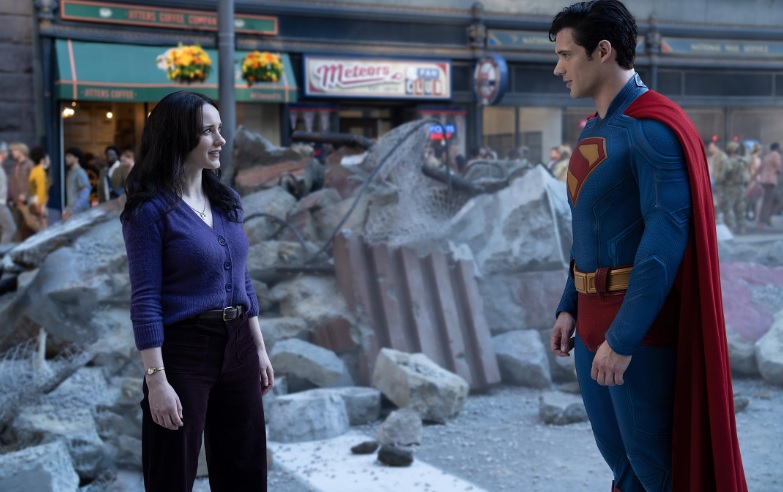
Corenswet holds his own in the lead role, but the supporting cast shines. Rachel Brosnahan delivers a sharp, no-nonsense Lois Lane who balances personal struggles with professionalism. Nicholas Hoult disappears into Lex Luthor, a billionaire genius obsessed with power and convinced of his superiority over Superman. Hoult’s Luthor embodies the mantra “brains over brawn” in a way that adds depth to his rivalry with the Man of Steel.

One standout is Edi Gathegi’s Mister Terrific. Though a lesser-known character in DC’s canon, Gathegi brings him to life with conviction. Gunn’s script, combined with Gathegi’s performance, gives Mister Terrific a strong presence—something Gunn has done before with Marvel’s Guardians of the Galaxy.
Superman doesn’t shy away from real-world parallels, a move that stirred minor controversy pre-release. These references aren’t subtle, but they don’t overpower the story. Instead, they tie into the film’s larger narrative, reflecting the times much like past Superman iterations.
Visually, the film is a clear departure from the dark, muted tones of the Snyder era. Metropolis is vibrant and comic-book bright. Superman’s suit echoes Christopher Reeve’s classic look, updated for a modern audience. The result is a more welcoming visual experience that draws viewers into the story.
Gunn also introduces new characters—Green Lantern (Nathan Fillion), Hawkgirl (Isabela Merced), and Mister Terrific—hinting at a larger universe without overshadowing the main story. The inclusion of Krypto the Superdog adds levity and fits within the film’s lighter tone.


The film’s midpoint marks a shift from exposition to character-driven action. Gunn’s writing balances world-building with emotional stakes, allowing key moments to resonate. The final act delivers spectacle without losing sight of its characters, a strength of Gunn’s storytelling.
Superman feels like the start of something larger. While the early exposition can feel dense, strong performances and Gunn’s vision keep the film grounded. It manages to introduce a new Superman while laying the groundwork for a shared universe—a task many franchise films struggle with.
With its political nods, colorful visuals, and standout cast, Superman sets a strong foundation for DC’s rebooted cinematic universe. It honors the character’s legacy while providing a fresh take suited for today’s audience. Gunn’s Supermandoesn’t aim to reinvent the genre—it focuses on building a universe with heart, humor, and lasting appeal.