














Founder Ebony Renée Devereaux built the club for people curious about what happens offstage.
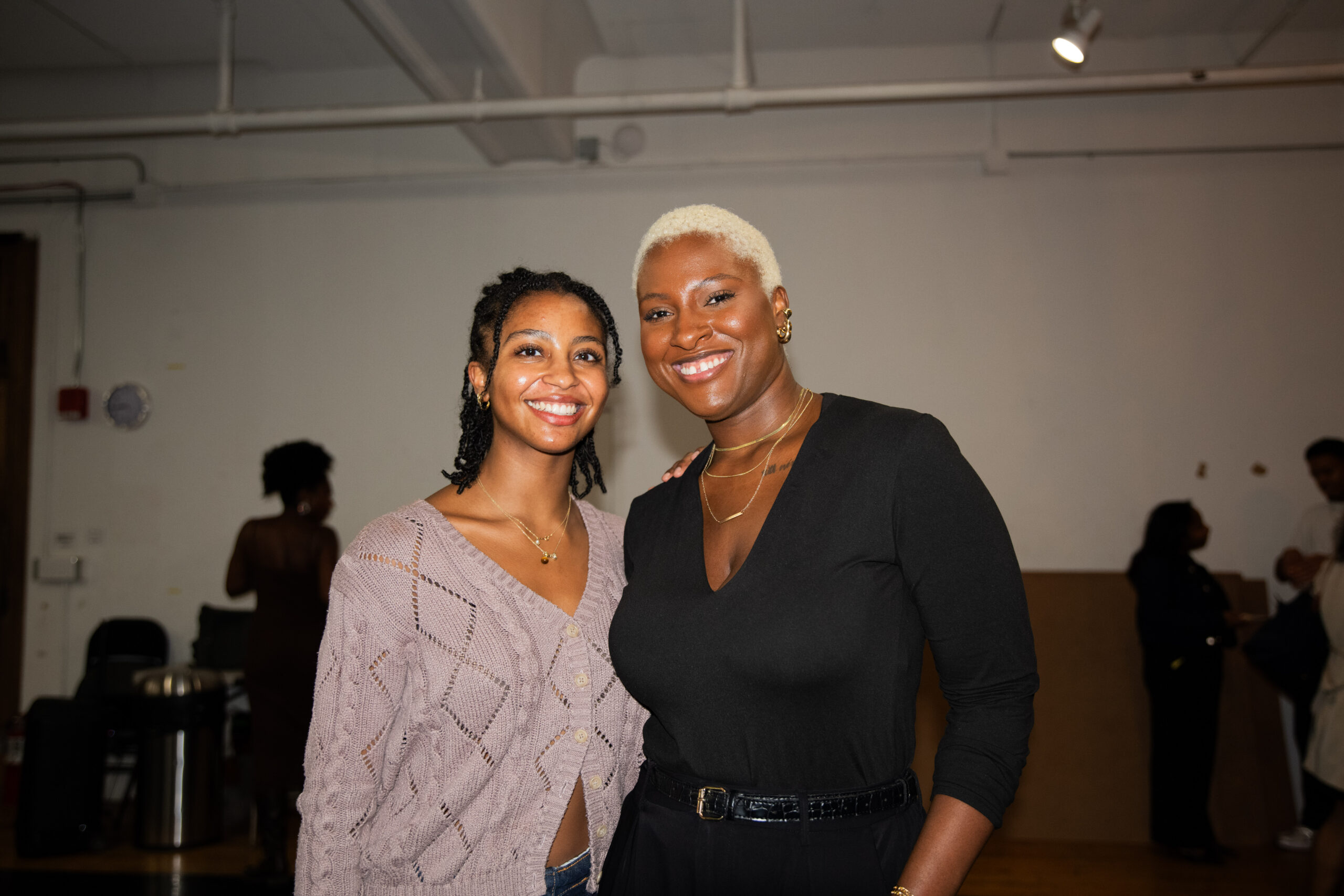
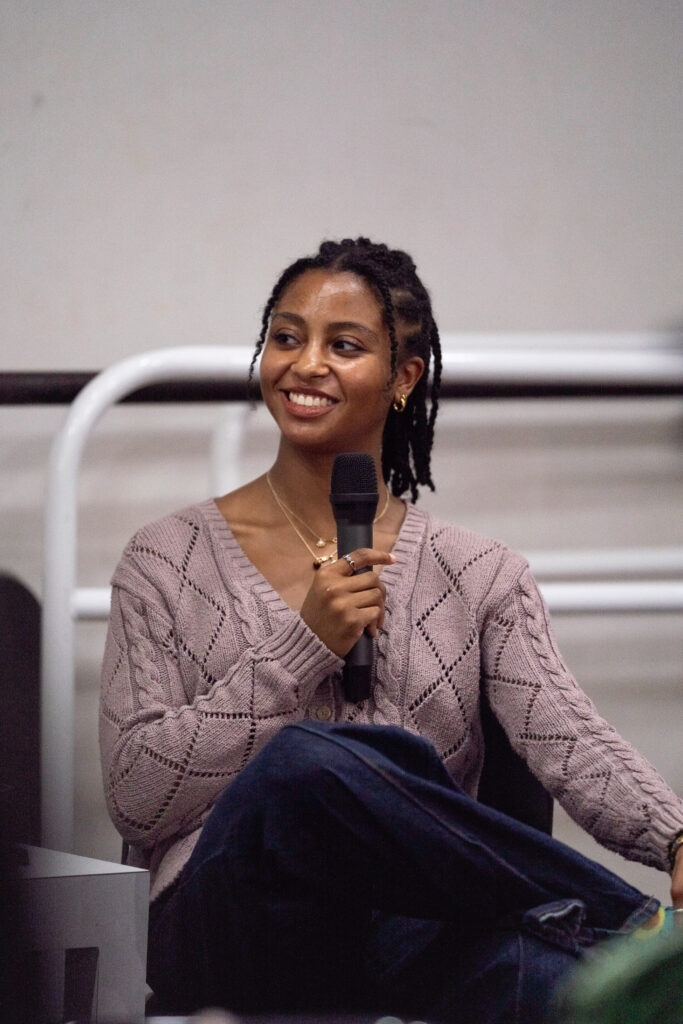
NEW YORK — Ebony Renée Devereaux recognized something familiar in Madison Brown long before she brought her to Soirée Social Club. Devereaux had followed the American Ballet Theatre dancer since a viral competition video, and on Sept. 29 she sat across from her at Gibney Studios, 890 Broadway, for Fireside Chat: A Conversation on Black Artistry in Ballet.
Reflecting on the exchange, Devereaux described years of watching Brown’s ascension. “Truthfully, in my heart, I was like that is a star on the rise,” she said. Brown’s quiet, observant manner struck closer to home. “I think I recognized myself in her,” Devereaux said.
The club launched last year with an intimate gathering at the Metropolitan Opera House during ABT’s season, where guests met principal dancer Calvin Royal III backstage. Some of those guests returned for the fireside chat, joined by dancers, dance lovers and students from ABT’s Jacqueline Kennedy Onassis School.
Royal, who presented the evening with Soirée Social Club as its producing partner, was set to join Brown in conversation but fell ill shortly before the program. Devereaux opened by reading his message. “I am so terribly sorry that I can’t be there with you tonight. Catching COVID was not part of the plan, but here we are,” Royal wrote. “If anything, it’s a reminder to take good care of ourselves as we enter into a new season.”
Devereaux wants her guests close to artists they usually see from a distance, offering “the intimacy of getting to know these artists that we see in such a grand scale.” She continued, “Soirée Social Club is dedicated to honoring the legacy and contributions of Black artists across the fine and classical performing arts, while educating and engaging the Black community around our historical and ongoing cultural impact.”
“You dance for you”
Devereaux began the conversation by noting that Brown, who grew up in Wellington, Florida, started training at 2, then asked when she first recognized “your individual voice as an artist, and not simply your ability to dance.” Brown went back about eight years into her training, when a teacher told her a company career was within reach. She decided then that ballet would be her life. Soon after, her mother showed her a post about a Black ballerina at the art form’s top rank, and the goal took on a larger purpose.
“I think it’s easy to dance and move your body, but it’s different to move your body and feel what you’re doing in all of your senses,” Brown said. Joining the main company meant trading one-on-one coaching for the back of a crowded room, where feedback came less often. “You dance for you, and you have to keep going,” Brown said.
In March, she replaced principal Isabella Boylston, then on maternity leave, as Emilia in Lar Lubovitch’s “Othello: A Dance in Three Acts,” with Royal in the title role. Watching the principals taught her when to rest. “Calm down, sit down, and wait,” Brown said. Returning to partnering after time away, she second-guessed herself until she settled on “owning who you are, because that’s how you get to that point.”
Addressing ballet’s reputation as a historically white art form, Brown pointed to an early, blind love for the craft. “I fell in love with this so young, not knowing anything systematically, politically,” she said. She later learned the history. “I didn’t know that this was a predominantly white art form when I was two or when I was twelve, and I said I want to do this. Because I saw someone that look like me doing it,” Brown said.
Devereaux pushed past the career recap and asked what progress would actually look like. “What would meaningful progress feel like inside the studio?” Devereaux asked. “And also in the audience.”
Brown answered with what it takes to get dressed for the stage. When she joined the company, her pointe shoes, ribbons and elastic didn’t match her skin, and she wanted every piece to. “And it did, you know?” Brown said. Her standard for the stage is simple. “Make it match, you know, show it all,” she said. To bring more of the Black community into the seats, she suggested starting with schools in Black neighborhoods.
“Can’t rush the process”
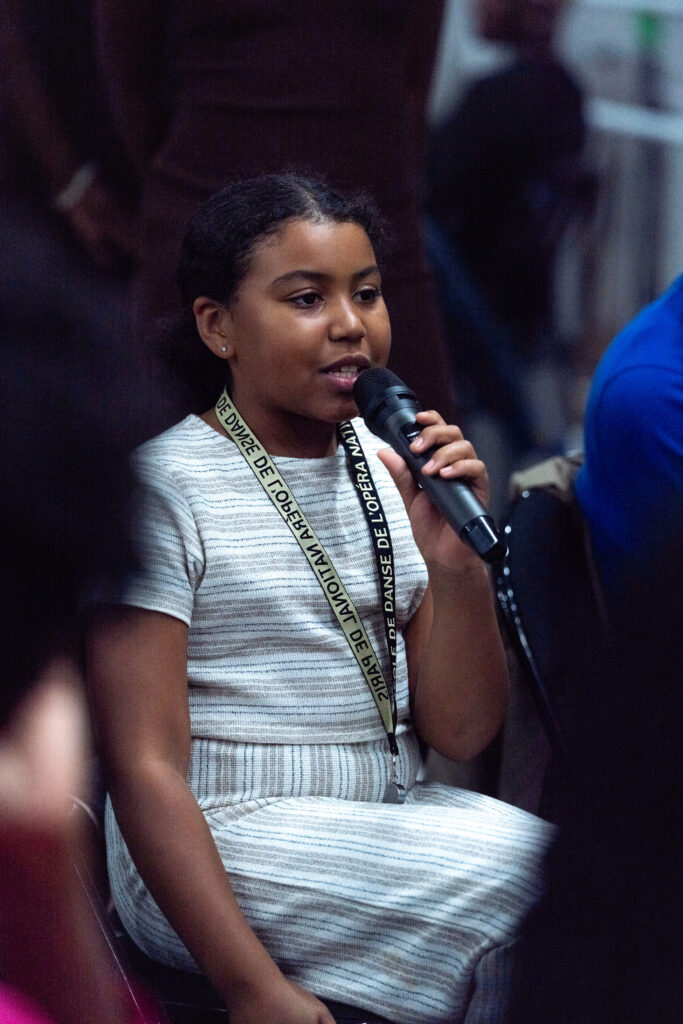
When the floor opened, I asked what advice she would give to her younger self. “Your reflection isn’t that important,” Brown said. “It’s not.” I asked her to say more. Growing up in ballet, she said, the comparison never stopped at other dancers. “It’s so easy to not only compare yourself to others, but compare yourself to yourself,” Brown said. “You can remember what you look like five days ago … and what you look like today.” She described checking her knees and her lines against the version of herself from earlier in the week, a habit that turned into a downward spiral. What matters, she said, is how the dancing feels. She added that she still works at it and wishes she had heard that perspective sooner.
An audience member asked about a moment onstage that felt almost holy. She went back to dancing barefoot in a hotel ballroom at 12 or 13. “I love what I do, and I wanna do it forever, and I wanna be able to make everyone in the room feel what I feel when I do it,” she said.
When asked what questions still follow her, Brown was candid. “As a woman of color, I question my place quite a bit,” she said, adding that she still wonders, “does anybody want to see this?”
A JKO student asked whether she felt supported coming up. “I didn’t,” Brown said. She remembered scanning rooms where she was the only dancer who looked like her. “If I’m not good, I’m never gonna be great in here,” she recalled thinking. Over time, she came to treat that difference as a gift, and the choice of how to see it as hers. “There’s nothing in the world that you have other than you,” Brown said.
The support that carried her started long before New York. When I spoke with Brown after the program, she went back to South Florida. Her mother’s best friend would drop off her own three children, then pick Brown up in Pompano and drive her to private lessons in Boca Raton, help with her homeschool work and make the 30-minute drive back to get her. Brown’s mother was working at a pharmacy to pay for her siblings’ activities. “I’m sure that my mom’s friend didn’t wanna come pick me up after she dropped all of her three kids off,” Brown said. “It takes a whole village, it really does.”
When an audience member asked whether she ever got pushback, Brown described how long matching took and gave the wardrobe staff credit. Early fittings paired a shoe in one color with a ribbon in another, trial after trial. She chose patience. “I can’t rush the process,” she said. Dancers and the wardrobe department don’t always speak the same language, she said, so she learned to spell out what she needed before each season. “We’ve come a long way,” Brown said.
“Joy in Progress”
Taylor Paige, a dancer, saw Brown’s stage presence carry into the conversation. “Her whole aura and her whole vibe felt like light,” Paige said. She related to Brown’s point that dancers often read as reserved when they are simply observing.
Mia Iverson heard her own experience in the reflection answer. “You know your reflection is everything, ’cause you’re constantly comparing yourself to others,” Iverson said, describing life as a Black girl in a predominantly white sport.
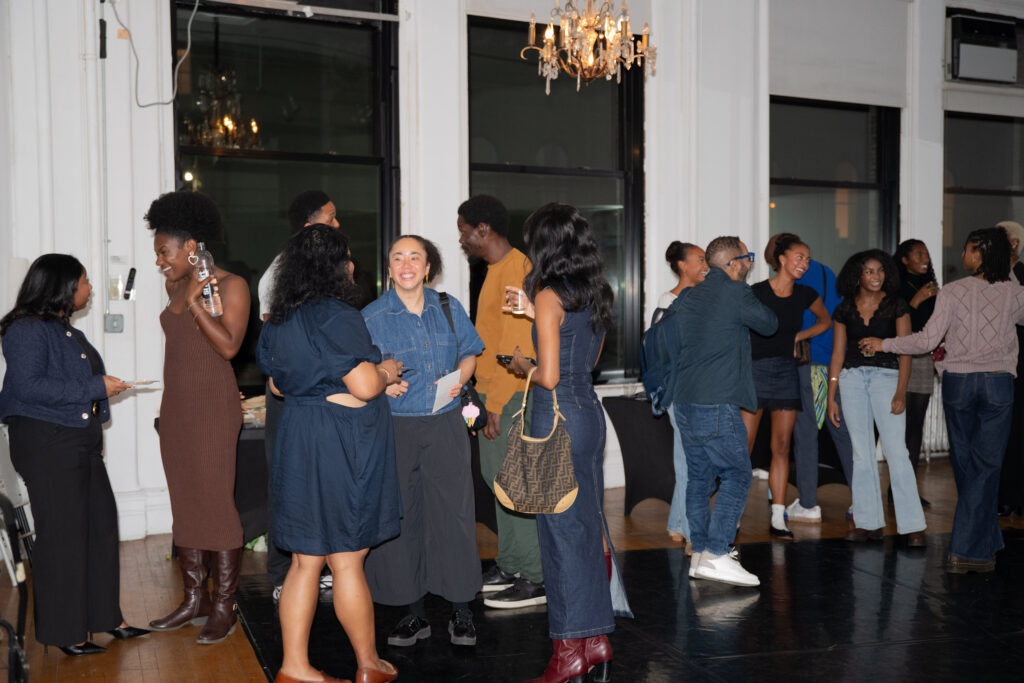
When I asked Iverson to describe the energy in the room, she kept it short. “I think the energy is joy, joy in progress,” Iverson said.
Devereaux built Soirée Social Club for rooms like this one, and she has more planned. She wants to bring guests to the ballet, the opera and the theater, each visit built around context about what they are about to see. Newcomers need no background in the art form. “You don’t have to know about the art form to come and experience it,” Devereaux said. Her message to anyone who missed the evening was simple. “To anyone who was not here tonight and may join next time, I welcome you,” she said.
Follow Soirée Social Club on Instagram, join the community or learn more at soireesocialnyc.com.