
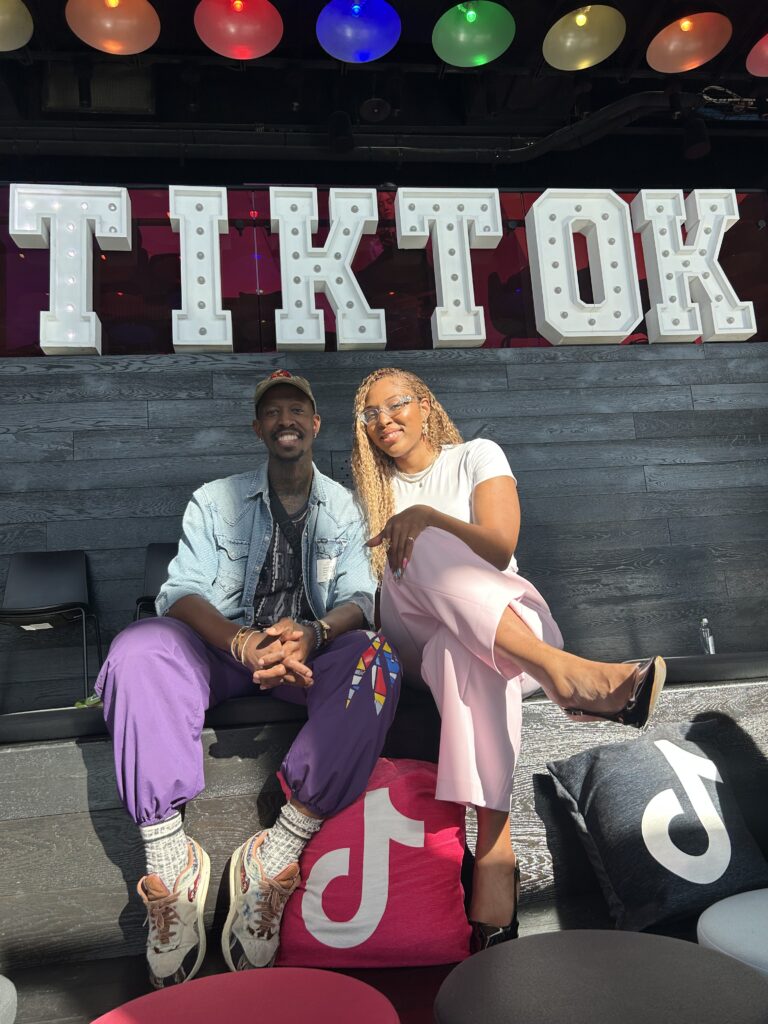
On a hot spring afternoon at TikTok’s headquarters, a room of founders and agency operators broke down social commerce. The mechanics were new but the lesson was familiar: community moves product.
At a 2026 social commerce masterclass at TikTok’s headquarters, cohosted by Go Fish Digital, founders and operators — Ahlisha Henderson of Sports Research, Mehgan Houston of Go Fish Digital, and Cruva’s Bryan Rangel — agreed that community and authentic creator content drive TikTok Shop sales more than ad spend.
Mary Skinner did not soften it. Asked what she wished she’d known when she started, she laughed and said, “Oh god, how fucking hard it is.”
Skinner is building a company that helps families plan for death — “make it a much more beautiful and inspired event,” she said, work that runs on trust long before it runs on transactions. She earned the right to be blunt. And in a room full of people learning to sell on TikTok, her bluntness was the throughline nobody put on a slide.
The creator economy is evolving — more sellers, shifting algorithms, a new tool to learn every quarter. Founders are hunting for an edge.
A masterclass in selling, a lesson in people
The event, cohosted by Go Fish Digital at TikTok’s headquarters, ran as a masterclass on social commerce — TikTok Shop, affiliates, live selling, the whole machine. Close to 100 people were in attendance, by the count of Sebastian Flores, who leads TikTok’s independent agency team on the East Coast. The platform’s pitch is hard to argue with. TikTok Shop is already the third-largest online marketplace in the country and the company’s fastest-growing U.S. product.
Then the founders started talking, and the conversation kept drifting away from algorithms and back to people.
Hannah M. Le invented the Buckle Scrunchie, a hair tie you unwrap without tangles or breakage. Solo founder. Zero outside funding. She credited TikTok with putting her product in front of people who’d never think to search for it. “It’s one of those that you really have to see and discover before you even consider thinking about,” she said.
Your identity is the product
Le warned new creators against chasing the algorithm at the expense of themselves.
“Figure out how you want to portray yourself. I think identity is a really big part of it,” she said. “Communicating whichever products you’re representing in your own way that your community understands. That is your superpower that these brands don’t have.”
Professional athletes and Olympians have told her the scrunchie changed their routine, and that feedback keeps her honest. “My only stakeholders are my customers,” she said. “This product goes beyond me.”
Ethan Kramer, whose firm started working with creator-led brands in 2020, framed the year ahead around two words: incrementality and integration. Stop running channels in silos. Let demand generation, capture and shaping move as one system. But when he explained why creator content outperforms polished ads, he landed exactly where Le did.
“The authenticity that they brought to their business journeys was truly unique,” Kramer said, “and as a performance marketer, being able to leverage those things just showed us such faster growth than we had seen before.”
Flores said it plainest. The brands winning on the platform run it as a business function — he pointed to Sports Research, which built an entire social commerce team in-house. The reason it works comes down to one thing. “So many sales, whether that’s products or services, are actually being driven by human connection,” he said.

Community is the salesforce
Ahlisha Henderson runs that work at Sports Research. Three years into social commerce, she has watched the platform rewrite who gets to sell.
“It’s not a sexy influencer, it’s people that are in the middle of America,” Henderson said. “They’re selling products, and they’re feeding their family, and it created a new life for them. It created a new life for me and my team.”
Her advice to anyone with a following who hasn’t sold a thing yet: study before you spend. “Educate yourself, do as much research as possible, like nerd out,” she said. “Who’s doing what you want to do already? Replicate that and put your own tone and voice to it.”
The part that holds it together happens offline. After years of building relationships through a screen, Henderson watched the energy change once people started meeting again. “It’s one thing to communicate online with somebody,” she said. “But when you meet them in person, it deepens the relationship in a way that can’t be bought.”
Bryan Rangel, head of partnerships at Cruva, an affiliate tool for TikTok Shop, framed that community as an asset you build on purpose. “Anybody can be an affiliate,” he said. “And every brand should try to build a community. Because that army of community is what’s going to lead to your product going viral.”
Rangel flagged the unglamorous part too. The barrier to entry on TikTok Shop is paperwork. “Making sure the business identification’s matching, so you don’t get blocked from the get-go,” he said. Get the LLC and the documents right before the first sale.
The numbers back the conversation. CPMs are climbing and organic reach is shrinking, so scattershot posting stopped working. What you actually post — the video, the hook, the story — drives more than 60 percent of a campaign’s results. Brands that spent on top-of-funnel storytelling saw an 18 percent lift in return on ad spend online.
The rails changed. The train didn’t.
Noelle Kimble McEntee closed the loop on the human stakes. She just sold her company in the caregiving and death-tech space — work, she said, “to help make it easier for people to live, care, and die.” Her advice for the founder with an idea and no blueprint carried the weight of her field.
“If you’re passionate and kind and authentic and pursuing something that you believe is gonna help make your world and other people’s worlds better, it generally will work out,” she said. “It’s never gonna be where you expect to be, but you’ll find and attract the right people.”
Skinner reached the same place. For her, the hardest part of building and the best part turned out to be one and the same. “It takes a village to create a business,” she said. “It’s the people.”
The tools changed. TikTok Shop, affiliates, live selling — new rails for an old train. What moves product up those rails has not changed at all. Build something worth talking about. Find the people who care. Let them carry it.
For the operators who want the playbook, the people who ran the room are the place to start. Go Fish Digital, which cohosted the masterclass, breaks down social commerce, SEO and paid media at gofishdigital.com. Cruva — Bryan Rangel’s affiliate platform — runs the outreach engine at cruva.com.