
Before a tree reaches sunlight, it goes down.
Roots push through rock, through clay, through whatever the ground decides to throw at them. Nobody sees that part. The struggle is underground, invisible. The tree looks dormant from the outside. Inside, it is doing the hardest work of its life.
Jackson A. Waters understands this intimately. At 24 years old, the New York-based composer is weeks away from his Carnegie Hall debut —as the grand prize winner of the New York Youth Symphony’s Jon Deak First Music Competition, Waters was commissioned to write Migrate, a piano quartet premiering alongside dancers from Emerge 125 at Carnegie Hall and Interlochen Center for the Arts.
His orchestral suite Defending Greenwood—a work exploring the 1921 Tulsa Race Massacre—has earned national recognition and a West Coast premiere at the Cabrillo Festival. His chamber piece Shibboleth caught the attention of the New York Youth Symphony, leading to a commissioned work that will be performed alongside dancers from Emerge 125 on May 4.
From the outside, it looks like a legendary winning streak. He’d push back on that framing immediately.
“You’re seeing the 5 percent of effort that got what I aspired to get,” Waters said. “With every award, there are thousands of rejections.”
Waters started on trumpet in the fourth grade. He never took to the piano—which, in the world of classical composition, makes him an outlier. Most composers learn to hear through the piano, a singular instrument that contains the entire orchestra within its range. Waters learned to hear differently. He sat inside ensembles, watched conductors balance sound in real time, learned orchestration the way a construction worker learns architecture—from inside the structure.
“I was a part of a whole,” he said. “Whether that was a wind ensemble, jazz band, orchestra—I started seeing the conductor mix the band. And I got to hear how different instruments work together.”
That ear—trained from the inside—became the foundation of everything. But the roots had to go deeper than technique.

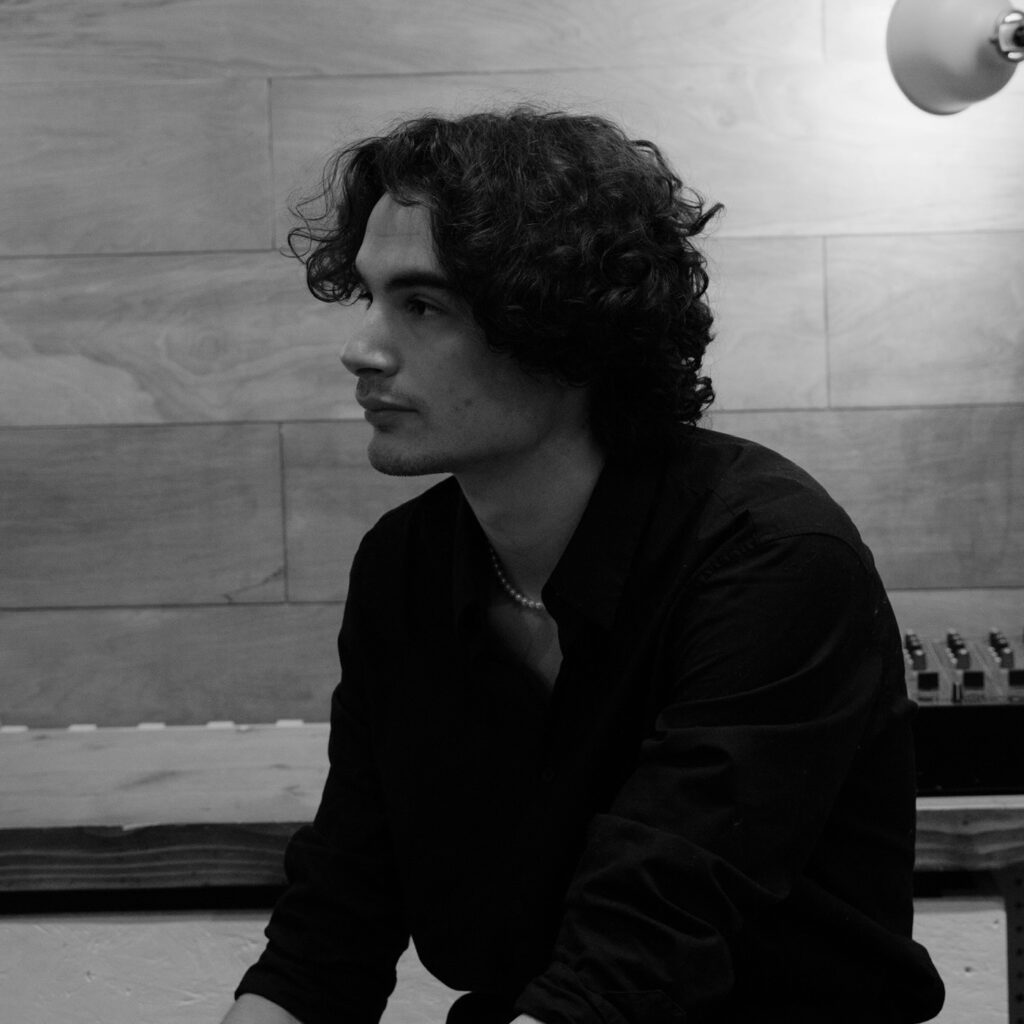
Waters’ mother made sure he knew where he came from.
She didn’t wait for a classroom to teach him. She understood the world he was walking into, and she wanted him equipped. She taught him about the massacre of Greenwood, Oklahoma. About Black Wall Street. About her grandfather, who was there when it burned in 1921—one of the deadliest acts of racial violence in American history, a race riot the country spent decades pretending didn’t happen.
“My jaw dropped when I was hearing these stories,” Waters said. “I just didn’t—how has nobody talked about this?”
He sat with that question for years. Then, during his senior year of high school, his youth orchestra conductor offhandedly mentioned he’d love to hear an original piece. Waters said he had one. He did not. He went home and wrote a five-minute orchestral work in five days, pulling from everything his mother had poured into him. That piece became the seed of Defending Greenwood—eventually four movements, years in the making, and one of the most recognized works of his early career.
But the recognition came with a cost he didn’t anticipate.
Waters is mixed race. Light-skinned enough that people look at him and make assumptions. And when Defending Greenwood started gaining traction, some of those people—white peers, mostly — started asking questions that weren’t really questions.
“Are you sure you’re allowed to write something like this?”
The suggestion that his bloodline wasn’t Black enough to carry this story. That his mother’s grandfather’s survival wasn’t sufficient credential. That the history his mother deliberately handed him somehow didn’t belong to him.
“I took that very hard,” he said. “I felt so conflicted—am I the white savior? Am I taking something away from other people?”
He kept writing. But the weight was real.
“There’s an equal part of hardship,” he said, “of trying to get this seen, and concern about my right to write something like this. It was a daring project on many levels—but primarily emotionally.”
What carried him through was the same thing that has carried him through everything: his mentors. Derek Skye, who has guided Waters through some of his most demanding work, heard him wrestling with the question of belonging and offered something cleaner than reassurance.
“You do not have to explain that you belong here,” Skye told him. “If you’re not careful, you’re going to have to explain that to everybody.”
Waters held onto that.
His mother knew what she was doing when she sat him down and told him about his great-great-grandfather. She fortified his foundation. She was giving him authority. Giving him roots deep enough to hold the tree upright when the wind came.
For Shibboleth, a string trio examining the complexities of mixed-race identity, Waters went out to do some research before he wrote a single note.
He interviewed friends—specifically, friends who were also mixed race. People navigating the same exhausting negotiation he was. Am I Black enough for this? Am I too white for that? Far from looking for sympathy, he was building source material.
“I wanted to find the community around me,” he said. “I wanted to see their experiences.”
He recorded the conversations. Then he did something a classical composer isn’t supposed to do. He treated the recordings like samples. Chopped them up and looped segments. Started improvising over the samples the way a hip-hop producer works a break—hunting for the groove buried inside somebody else’s words. The tension between those two worlds, concert music and Hip-Hop production instinct, became the piece itself.
“I started clipping, taking segments out, chopping and screwing them,” he said. “Doing Hip-Hop techniques — just seeing what kind of grooves I can make.”
The result was a collective portrait. The internal conflict of people who’ve spent their whole lives being questioned about where they belong, rendered in strings without a single word spoken.
“Recording things around me,” he said. “Embracing, rather than being closed in.”
The roots don’t grow alone. They pull from everything around them.
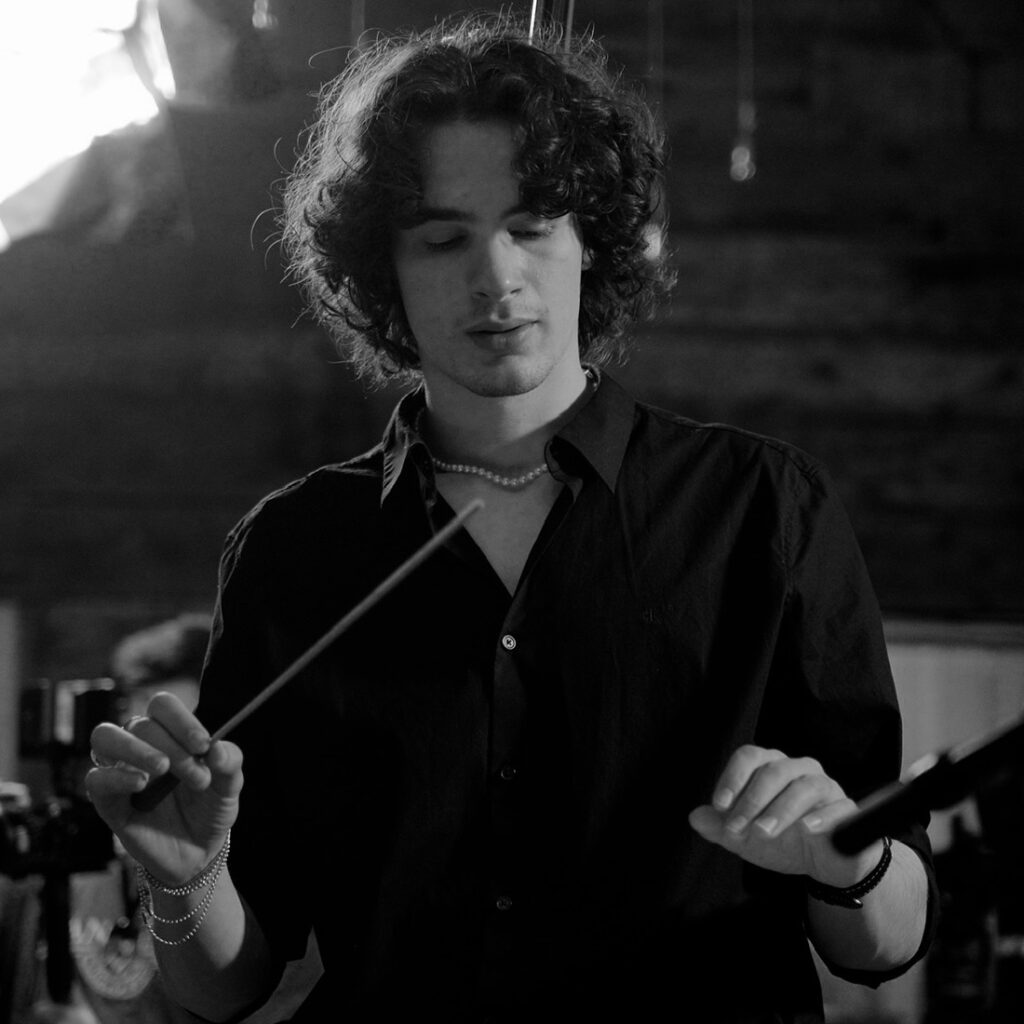
Jackson A. Waters is a world-class composer. But before he’s a composer, he’s a man. And men are socialized to absorb. To keep it moving. The world doesn’t build many outlets for what accumulates.
my rage is quiet, his forthcoming orchestral work premiering June 9 at Herbst Theater in San Francisco, is one of those outlets.
The title came from lived experience — his own habit of internalizing frustration while everyone around him performed their outrage publicly. Social media is the soundboard. Opinion after opinion stacked on top of grief stacked on top of fear. And Waters, watching all of it, pushed his down.
“Everyone’s blasting their opinions, everyone’s blasting stuff on their story,” he said. “It’s so overwhelming. And if you’re not doing that, people are like, what are you doing?”
So you internalize it – and internalized energy doesn’t disappear. It transfers. It builds pressure in the places nobody sees — until something small, something completely unrelated, finally tips the weight.
“When you suppress something for too long, there’s a big explosion,” he said. “And it’s typically at something you don’t want to be angry at.”
The piece tracks that arc. It opens quiet, but restless — subtle tension underneath the surface. It builds. It de-escalates. Then it builds again. Not a single dramatic moment but a cycle, the same one most people run on autopilot not knowing what to call it.
Waters named it. Then he scored it.
When Waters found out about his latest award, he called his father.
His dad’s response was immediate. “Put that on the list.” Then he asked what it was about. Waters told him he wasn’t sure yet.
“I’m just grateful,” he said with a smile.
That’s the posture. Gratitude. Because behind every commission or every award ceremony is a graveyard of rejections Waters has long stopped counting. Grant applications that went unanswered for six months. Pieces that took years to find an audience. Work that demanded everything and returned nothing — until it did.
The winning streak people see from the outside is real. So are the thousand losses that made it possible.
That’s how roots work. They don’t ask for credit. They just go deeper — until one day, without warning, something breaks through the surface.
The tree was always there. You just couldn’t see it yet.
Jackson A. Waters is making his Carnegie Hall debut May 4th, premiering Migrate with the New York Youth Symphony and Emerge 125. Get your tickets here.