
Commissioned by the New York Youth Symphony and performed with Emerge125, Waters’ debut was one for the books.
Becoming a mother is a miracle. Giving birth to a child who gets mentioned in the same breath as Mozart and Beethoven — that’s a different kind of miracle entirely. Danielle Waters was in tears watching her son’s Carnegie Hall debut.
“I knew he was special,” she said, standing in the lobby after the performance. “I was kind of pushing him into jazz, but his brain didn’t function that way.”
When asked about the actual feeling of seeing Migrate live and in motion, she searched for the right words.
“So proud.” Pausing with a smile, she continued, “I still need to be pinched.”

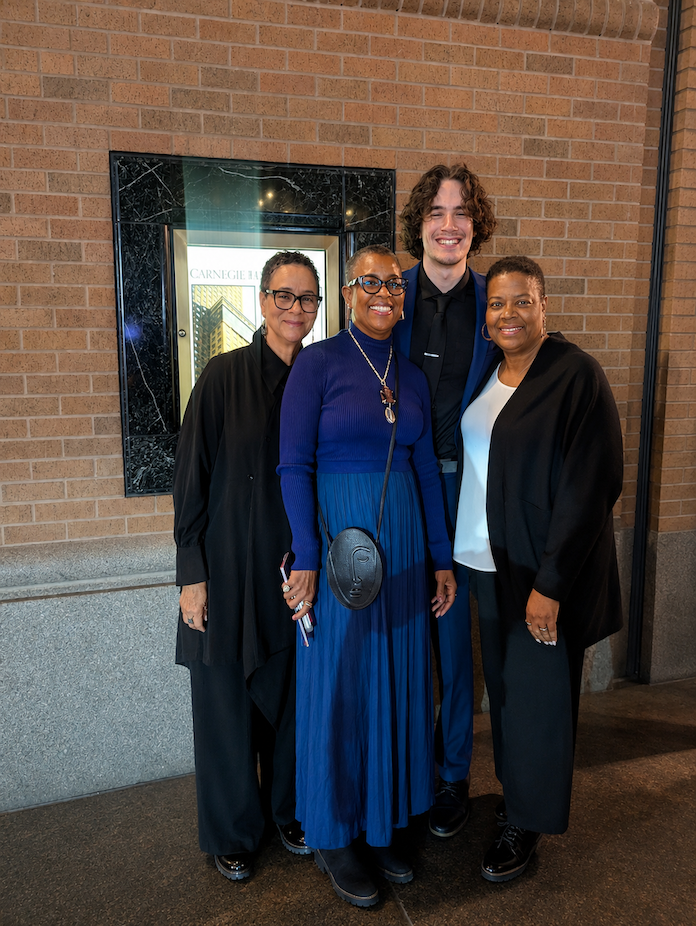
With a large group of his family in attendance, Jackson’s Carnegie Hall debut felt more like a homecoming.
Jackson A. Waters is 24. He grew up absorbing Motown, studying at NYU Steinhardt under Pulitzer Prize-winning composer Julia Wolfe, and writing music that doesn’t fit neatly into any single tradition. That night, his piano quartet Migrate closed a program that also featured Brahms and Florence Price. His mother didn’t fully understand what she was hearing when he first started piecing it together at home.
“I didn’t know what I was listening to until he fine-tuned it,” she said. “And then fine-tuned it again, and then fine-tuned it again. And then it was just unbelievable.”
Migrate was commissioned by the Grammy-winning New York Youth Symphony through the Jon Deak First Music Grand Prize for Chamber Music.

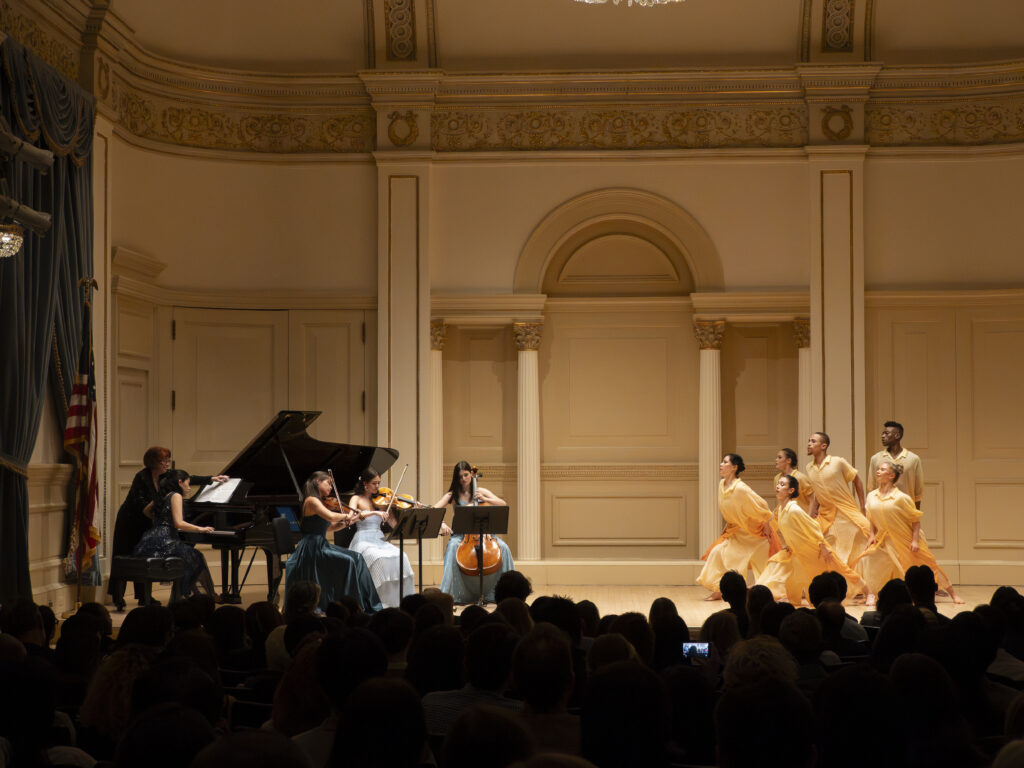
The piece is a 12-minute rhapsody for piano quartet and dance — a meditation on leaving, arriving, and the emotional cost of both. Waters drew from field recordings he captured while traveling in Japan during the summer of 2025, threading that material into something that speaks to both animal and human migration. The parallels are intentional. Migration, he argued in his notes to the audience, is an act of courage.
Harlem-based dance company Emerge125 brought the piece to life under choreographer Tiffany Rea-Fisher. Jenna Kulacz, one of the dancers, said the experience of performing alongside live musicians at Carnegie Hall felt different than anything she’d done before.
“There’s nothing like this,” she said. “It is the most present you will ever have to be as a dancer — in the best way. It is electric. It keeps me on my toes, it keeps me grounded, it keeps me attentive to my breath. To the dancers around me. It is absolutely incredible, and I wish I could do it a million more times.”
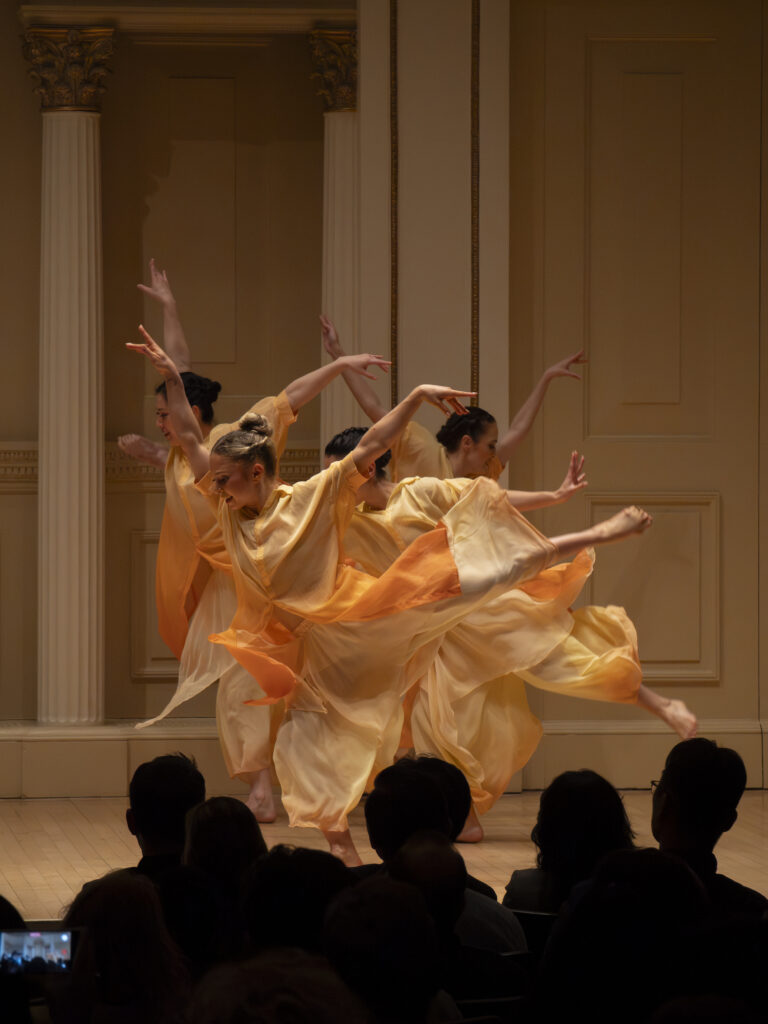
Fellow dancer Madelyn Canaj echoed that. Carnegie Hall’s architecture is built for music — the acoustics amplify everything. Being onstage there, in an intimate configuration with musicians just feet away, changed what was physically possible.
“With the musicians right next to us, and this hall made for music, it amplifies everything,” she said. “It just gives you a little bit more power behind our movement. We knew it was about birds. We were in an intimate space, so we were able to use our breath and our upper body even more to portray all of that.”
She had never performed at Carnegie Hall before that night. She’d been there once, as an audience member, to watch the New York City Symphony.
“I have never ever thought I’d ever perform here,” she said. “So I’m truly honored.”

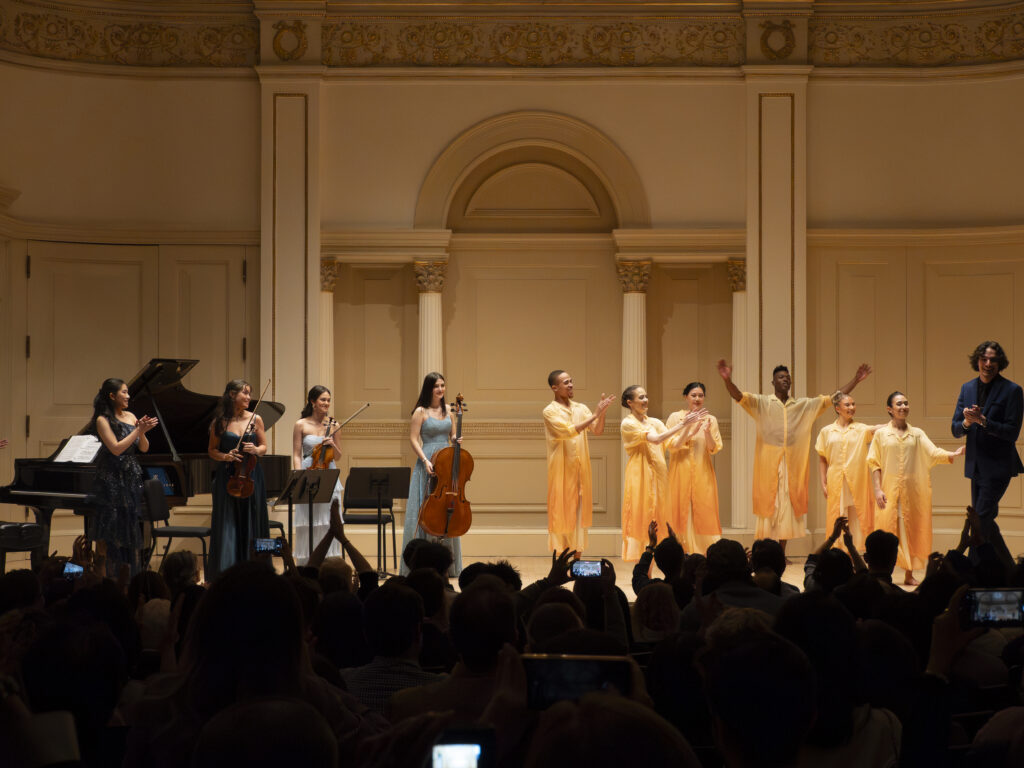
Waters watched the whole thing from the audience. He described the feeling after the performance in one word.
“Magical.”
Everything came together. Emerge125 did their job. The musicians personified the music. And the composer — the guy who wrote the piece in two months after getting the greenlight from Japan, under a hard October 1 deadline — finally exhaled.
“I just feel relieved,” he said. “Everyone’s done such a great job, and just seeing it all come together in this final production — it’s just been absolutely exhilarating.”
The piece’s emotional core landed exactly where he intended. Seeing Migrate performed rather than heard opened something different — a visual language for music that had only existed in score form.
“Seeing it visually — that just took it to a whole other level,” he said.
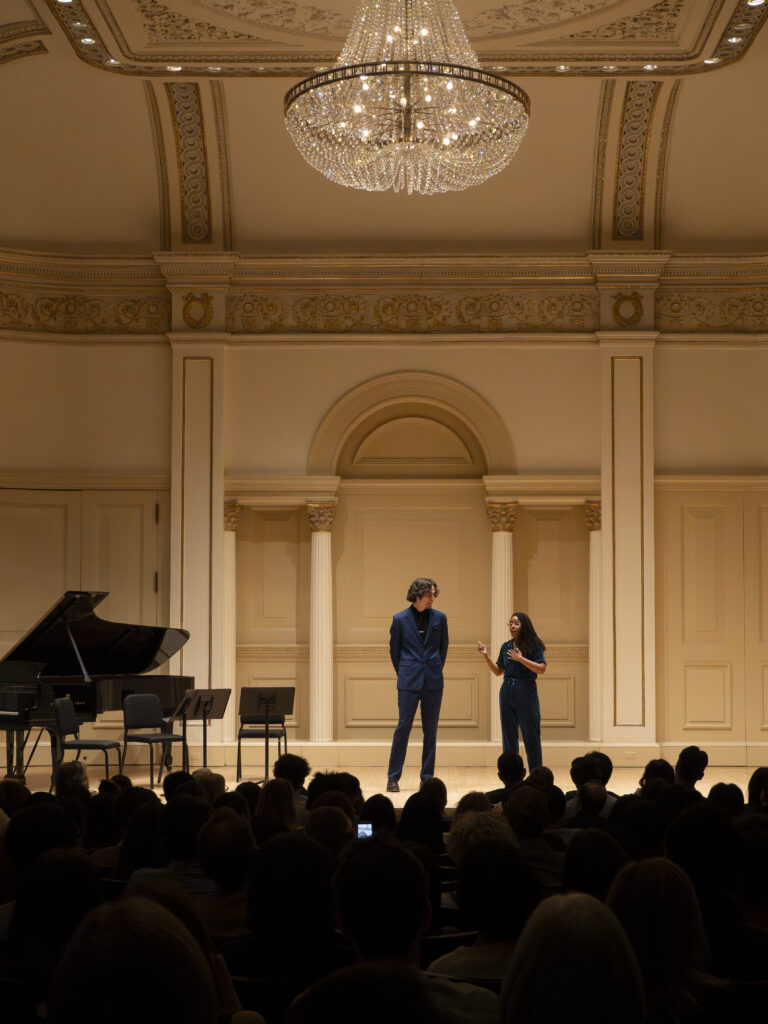
In Motion
The calendar doesn’t slow down. my rage is quiet premieres at San Francisco’s Herbst Theatre on June 9. The concert is free to attend and no tickets are necessary. Migrate gets a second life at Interlochen in July. Come August, Waters takes up residency at the Cabrillo Festival of Contemporary Music, where they are performing two movements of his orchestral work, Defending Greenwood. Jackson will also be arranging and conducting on October 18 for SIMRIT’s concert with Live Room Orchestra at the world famous Gramercy Theatre. As for 2027, Waters’ residency continues with the Cabrillo Festival of Contemporary Music commissioning a new orchestral work with a premiere next season.
Defending Greenwood musically tells the story of the Tulsa Race Massacre, which is Waters’ actual family history. His great-great-grandfather was a child living on Black Wall Street when the race riots took place. His mother would tell him stories of their history but had no idea that they resonated with Jackson until she heard the music.
“Every time he puts his mind to something,” she paused in proud parent fashion, “It just comes through. We are always in shock.”
Jackson A. Waters is just getting started. Follow his journey at jacksonawaters.com.