
The Newark councilman and media executive talk the power of Hip Hop and more
“You ever seen something that was beautiful because it wasn’t perfect?”
Councilman Dupré “DoItAll” Kelly asked me that question somewhere between a conversation about Hip Hop and one about fatherhood.
The answer is yes — and the first thing that comes to mind is family. The second is Hip Hop. Neither one is clean. Both have let people down. And both have produced something the world keeps coming back to.
I sat down with Kelly and his cousin Khairi Williams at the legendary Hycide Xpanse in Newark to talk about where they come from, what they’ve built, and why the two things they love most — family and Hip Hop — refuse to stay in the lane people assign them.
Individually, they’ve moved through rooms most people only read about. Kelly, one-third of Lords of the Underground and the councilman representing Newark’s West Ward, has spent decades understanding that nothing real gets assembled alone. Williams built a career at ESPN, Spotify Legion Media Group by doing one thing better than most: creating relationships and asking people to build something together.
This conversation is about what they’re building now, and why they’re doing it as family.
James Rashad of WWB- Birthed in the Bronx in the 70’s, Hip Hop has come a long way. Hip Hop didn’t just produce music, it produced systems, spaces, relationships, and organizations that allowed people in a community to connect, solve problems together, and hold institutions accountable. Growing up, did you ever imagine the power of Hip Hop?
Councilman Dupre “DoItAll” Kelly – When I think about that, the power of hip hop.
I think about the word hip hop. Hip being in the now, being in the knowing. You’re hip, you’re in the now, you’re in the knowing… Hop being a form of movement. If you look at it that way, it is the now movement. But all the time. That’s why it forever seems young. That’s why I will forever stay young. That’s why some artists say, ‘Well, he’s 30. Why is he still rapping?’ You know, or someone believes that you can’t rap when you’re 40 or something like that. Right?
Or beyond 40 if you haven’t already been doing it. But that’s the power of it within itself.
The power of the now movement.
So in its current time, in its current situation, all the time, even dating back into the past, right, from the Black Panther movement, doing breakfast for our children in the morning, which is now WIC? You know, that was the ‘now movement’, even though we weren’t calling it hip hop, then. But it was the now movement going on to civil rights, and Martin Luther King getting arrested for what he believed in was the now movement. All the way to public enemy, and Spike Lee teaming up together to do fight the power.
We consider it to be a movement when it’s going against the ills, when it’s going against the administration, when it’s going against the machine. Especially when it’s moving forward.
It’s the now movement. And it stays in motion.
Khairi Williams – I was researching some stuff about Robert Moses, who was an infrastructure guy-olarizing, to say the least. One of the projects that he created in the Bronx started in the 40’s – the Cross Bronx Expressway, which cuts directly through the South Bronx. They basically removed all these people that lived in this upper working class, middle class neighborhood, which were black and Hispanic people that had a thriving neighborhood.
People think it’s because of drugs, crime, or it was because of poverty overall. These are all byproducts of a very planned demolition to totally bulldoze an entire neighborhood in order to create an expressway to take it from the George Washington Bridge up into Connecticut.
So, even though everything that Do just said is right, because it’s the now movement. The spirit of Hip Hop has been going on well before 1973. But when we think of it, we just pick up in 1973. Like, this place was messed up, and then we created Hip Hop, Kool Herc, and Grandmaster Flash, and all of those brothers created this music and created this culture and it’s moving to the parks, and now here we are today.
But the part that we don’t tell in the story is that this thing was purposely done to oppress people for financial gain. We were cast aside. I’m sure some people may have been compensated to move to Westchester or whatever, but for the most part, people were just stranded or just pushed away to create this expressway.
And out of that rubble, out of that depression, we created this now movement, which was Hip Hop. Not just out of pure despair, but we didn’t have anything else to do. We chose the parks because that’s what we had available to us. We chose the abandoned buildings and the mattresses as trampolines, because that’s what was available to us.
Kelly – And put in those tension cords to the poles because that was the electricity, the power source that was available to us.
Williams – 100%. And these brothers are brilliant. Grand Master Flash is more than a DJ, he’s a scientist. To find a pedometer, and these are his words, to find a pedometer in rubble in the South Bronx, and figure out that, “I can take this pedometer, which is a crossfader, And if I put these two turntables, and if I do this through this”, that’s science. These brothers are mad scientists.
When we think about it, from a civic standpoint, it’s like a phoenix that rose from the ashes, literally. And that’s what we’re doing, challenging ourselves and challenging the culture to continue to move forward.

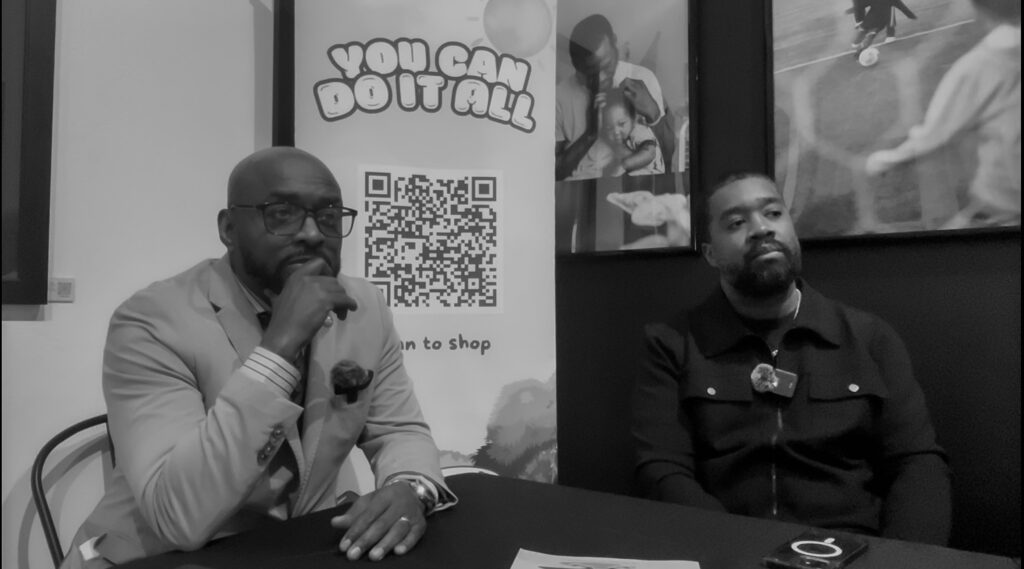
WWB – The Now movement. I’ve always struggled with time because even if you do something later, when it actually happens, it happens right now. Hip Hop has a way of always being at the forefront of the culture. It always finds a way to be innovative and right now. Somehow we make these anthems and songs that truly capture the moment.
KELLY – I want to expound on that too. They say energy never dies. If it never dies, then it’s always alive right now. Right?
It’s happening right now. It’s energy. Our song Chief Rocker, Lords of the Underground song, Chief Rocker, Somebody hit me up online and said, “Man, I feel like this knocks the same today as it did yesterday.”
So, that’s just the point of the energy that song made you feel, every time you listen to it.
When you capture the energy and you release it, we listen to it, we watch it, it releases every time, right then and there, right now. And it remains the same because you captured it, then, which still was a right now, at that moment.
And you release it every time you play it, every time you watch it, you release it right now.
Same energy, it never dies.
WWB – Same energy, never dies. But first it has to survive doubt. DoItAll, you said something earlier that stuck with me — “thinking comes from not knowing.” What do you mean by that?
Kelly – Something that I realized just through experience that has become a jewel for me— what I mean by thinking comes from not knowing— is because from the youngest age that I can remember up until approximately 18, maybe 19, anything I have ever said I was going to do or I was ever going to be a part of or I was ever going to get, I got it.
Not because I’m some type of magician. Not because I had millions of dollars. Because I believed it and I said it. And I did not know and understand what doubt was. It’s not until I signed my deal and then I started going through, “oh, this happens when this happens, oh, but damn, what if, what if”, and then they say, “well, what if this don’t happen?”
What if this doesn’t happen? Damn, what if it doesn’t happen? I never really dealt with the “what if it doesn’t happen.” I only knew to believe it, know it, and do it.
From the youngest age I can remember, maybe about 5-ish to 18, 19, anything I ever asked for, said I was going to do in my life, I have done. To me, that’s amazing in reflection because now I’m like, well, what happened to that magic? And then I had to answer myself with doubt. The shadow of doubt.
Because I believe I’m a positive person. In my mind, I don’t deal with doubt, but I do, right? I do, even on a minute scale. But that young Dupre, that young DoItAll, didn’t understand that.
I didn’t know what it was.
You know, so thinking comes from not knowing. I started to think— I started to think a lot when I got older and had more experiences. The overthinking does something.
WWB – Yeah, especially with creativity. My job as a creative is to present, it’s to produce. And when I produce, I put it on the stage for the world to critique it.
But as we know, you can’t think your way out of overthinking.
[We all bust out laughing]
People say it’s hard to work with family. I think it’s just hard to work with people. DoItAll, you’re in a legendary group that’s still touring and you hold a council seat where nothing moves without buy-in. Khairi, you’ve built a career on getting rooms full of strangers to make something together. How have you both navigated that?

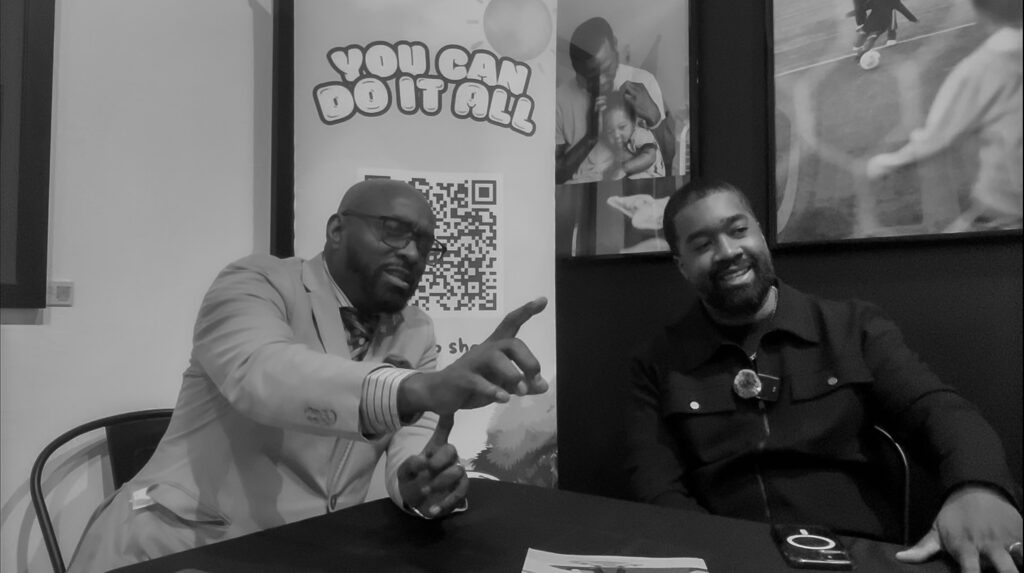
Williams – I’ll start at ESPN. When you start— they call it rookie campus or orientation. They teach you that whatever you got hired to do, whether you’re a groundskeeper or an executive producer, it’s going to be meaningless unless you step out of the four walls that you’re assigned to, where your desk is or your workstation is, and get out on this campus, it’s a massive campus, meet people and talk to people and collaborate, right? So I took that to heart because by nature I like to deal and build with people.
One of my first accomplishments was Elle Duncan, she’s incredible. Ellie is a Sports Anchor at Netflix. She did women’s basketball for a long time at ESPN. And I approached her one day just as a PA, like, yo, “I want to do a podcast about music, you want to do it with me?” And I think she was at first taken aback. Then she looked at me and she was like, hell yeah, let’s do it, let’s do a podcast about music at ESPN.
Then I approached my guy Jason Fitz, who’s a fiddler for the band Perry, Grammy Award-winning country band, and we created this podcast. It was a really cool project that we worked on. In the spirit of collaboration, it let me know that sometimes you have to open your mouth and talk to people.
Fast forward,I was at Spotify years later, and they had this grant to create a collection of stories about the World Cup for the World Cup in Qatar. It was with the production house that I was working with.
And of course, it’s about sports, it’s about soccer, but it’s storytelling, which is what they do really well at that, at Gimlet. But it was about sports. I got tasked to lead this project, and I said, well, we can’t effectively do a sports podcast, even though it’s storytelling, without bringing in The Ringer, who was the sister studio, who’s also at Spotify, Bill Simmons imprint. And they said, “oh well, we don’t know anybody at The Ringer.”
Steve Cerruti, I used to work with him at ESPN, he’s dope, he’s a producer, I’m gonna reach out to him.
I saw a lot of resistance at first. People at Gimlet and The Ringer didn’t want to work together. Gimlet was highbrow. We tell stories, we get awards, we do this, we do that. And Ringer was like, “these guys, I don’t know, they kind of look down on us. We just do sports.”
I’m maybe putting words in their mouth, but that was the vibe, right?
So I got the 10 people in a virtual room on Zoom, and I said, “listen, you guys do sports really, really well. The connections you have in the Sports world is very coveted, very respected. Bill Simmons, you know, all you guys have a really strong voice in sports, and you guys tell stories really well. And this is a collection of stories about a sport. It makes perfect sense for y’all to collaborate and come together, and I’ll do everything that needs to be done to have it come together.” We did. We did it together.
They co-hosted. This is me tooting my own horn, but in 2022 Men’s Health magazine listed that show as one of the top podcasts of 2022. Don Ostroff and the whole crew did their write-ups about it. I’m really proud.
Kelly – What’s the African proverb? They say, you want to go fast, you go alone.
You want to go far, we go together.
WWB – Hip Hop has been a double-edged sword — it’s made men rich and made men targets. It’s been used as evidence against people in courtrooms and as a soundtrack for revolutions. Outside of music, how have you used it — the actual culture, the actual values — to navigate your life?
Kelly – I believe that I am hip-hop.
So the moves that I make, whether it’s music influenced or not, shows people who are in the culture or come from music, what hip-hop looks like. It shows what hip-hop looks like as a politician. I am what hip-hop looks like growing up.
I am hip-hop. I am the culture. I am that thing that once started, whether we say it started in ’73, before then, whether you got used to it in the ’80s, ’90s, I am that. That culture that we call that now movement, whatever that movement continues to be, I am that.
I am that in the political field. I am that when I walk into business meetings. I am that when I am helping a single mother with her children. I am that when I am telling men to be fathers to their children.I am that when I am doing millions or billions of dollars of business for the city of Newark. Representing my ward that I was born and raised in.
There’s so many people who still don’t understand the culture of hip-hop because of the negative connotations that have been attached to it. But I show them, no, this is hip-hop.
Just like there’s a yin and a yang to everything, I am that other side of what you thought hip-hop was. I am that, and I stand on that. I will never stop being hip-hop for anyone. I am hip-hop.
And sometimes I get called to the principal’s office because I am hip-hop. I might wear a pair of sneakers with my suit. Or I might have a scully hat with the name of my city on it with a suit on. Or because I might just have a little more swagger in something that is perceived to be the uniform of a politician or the uniform of a businessman. We make things cool.
So I am hip-hop. I will never stop being hip-hop. When I’m on television acting, and if I’m playing the doctor, that’s hip-hop playing the doctor. If I’m playing a lawyer, that’s hip-hop playing the lawyer.
I am the first platinum-selling hip-hop artist to ever win an elected official seat in the United States of America.So that is hip-hop doing that. And hopefully will inspire more people that love hip-hop to know that they can do it.
In Part Two, Councilman Kelly and Khairi Williams talk about their children’s book You Can Do It All — what it means to build something for the next generation, and why confidence might be the most radical thing you can put in a child’s hands.