
Phillip Johnson Richardson is the masterclass in the art of being human
My daughter has watched The Wiz on Netflix no less than 20 times.
I’m not exaggerating. She was nine years old when she discovered it, and that movie became part of the rotation the way certain songs become part of your DNA. So when I surprised her with tickets to the Broadway production, Ari already knew every word, every character, and every scene. Then Phillip Johnson Richardson walked out as the Tin Man.
He introduced something to the play that’s much appreciated yet difficult to explain. I could say he brought a level of unapologetic Blackness but, it’s The Wiz, everybody was Black. This Brother onstage with the silver-painted face had total emotional command. He was cool in a way that could only be described as authenticity. Entertainment Weekly called it “B-boy cool before showcasing some major pipes and soul.” I get that. But what they didn’t catch was the stillness underneath it. The man was fully himself inside someone else’s character. One of the most amazing things I’ve ever seen. It felt like I was watching my cousin on stage. I was proud.
Ari was locked in for the whole show. On the way home, she couldn’t stop talking about the Tin Man. It was a unanimous decision — Phil. Richardson was the show.
We followed his music after that. I became a fan the day I heard “hurt ppl squared: in da summer.” Records like “don’t know nun” and “call my phone” became instant classics in my living room.
Then he released “stay with me” at the top of 2026, the type of song that can reignite the entire r&b genre.
Allow me to reintroduce you to Phil.

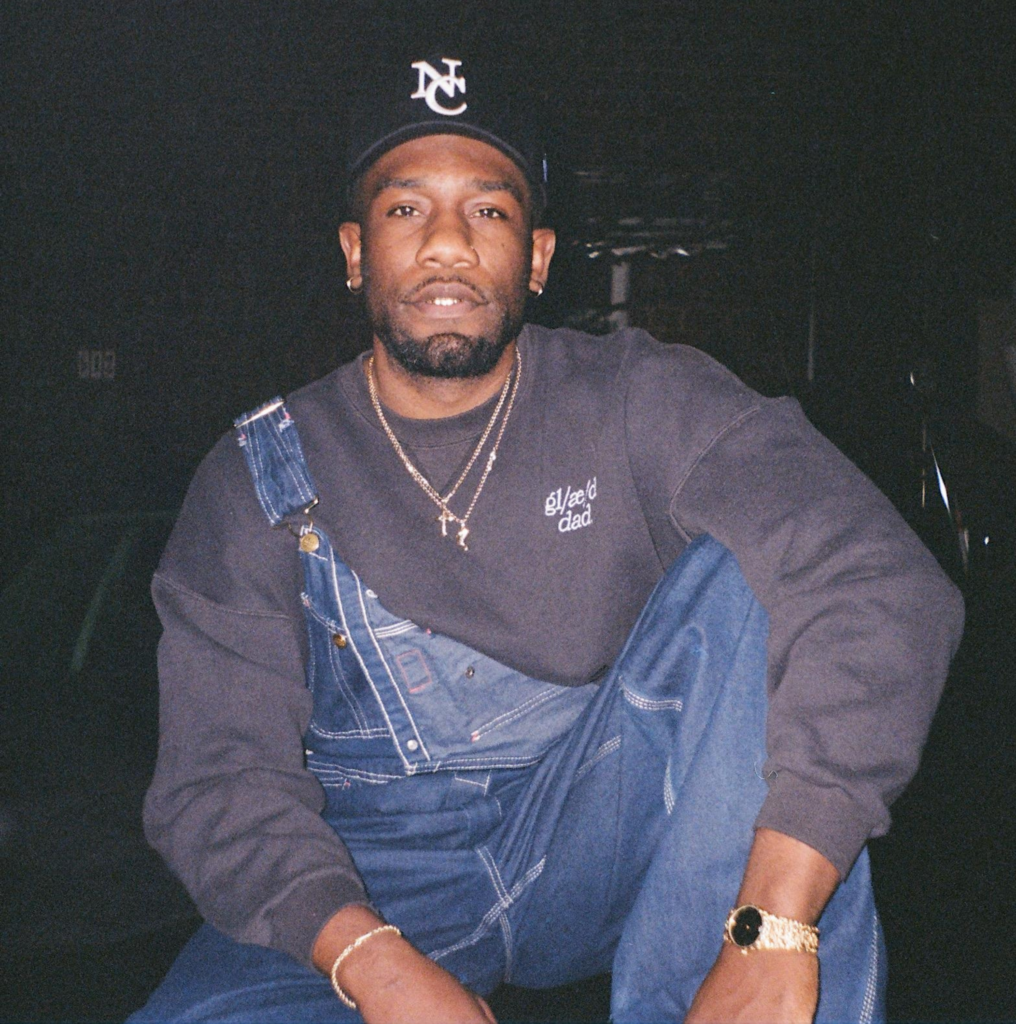
Hailing from Charlotte, North Carolina, Phil. is building his music career and the gl/æ/d dad. imprint without a label, a manager(specifically for music), or the infrastructure most people would assume he already has. With intention, assertiveness, and a few good friends he’s collected over the years, the 29 year old is betting on himself.
Phil.’s father passed away when he was 10. He found theater at 11. He said it like the timing wasn’t coincidental — like something was being passed to him.
“My whole life — if I wouldn’t have had theater — it would have gone differently,” he said. “Not saying I would have been in other shit, but I was a very gullible kid. I could have tripped up on the wrong stuff.”
He trained at Cincinnati Conservatory. “I got there and I had a culture shock,” he said. “I didn’t realize it was a PWI. My major was predominantly white. It was like 10 percent people of color — and that was the most they ever had.”
He adapted. The change of pace sharpened him. He thought about dropping out after his sophomore year. His mother said no. So he made a different calculation.
“I was like, if I go to this school — which is a really big institution for musical theater — then when I go to auditions, they’re going to see this on my resume. They’re going to be like, all right, we can give him the job. He’ll be fine.”
He stayed. He graduated. He moved to New York. He had been there for one month.
Then the email went out.
Phil. had been submitting tapes to Telsey and Company — the casting director behind Hamilton — for three years. After graduation, he went back into his inbox, found the contact, and sent a cold email. They brought him in for a general. Told him what to work on. A week later, they called back.
“We actually have an immediate replacement in Chicago,” they told him. “If you want to come in for this.”
He auditioned. He booked it. They told him he had a week to move.
“I had just moved to New York,” he said. “I was only here for about a month. And I said, oh shit — I’m about to move to Chicago.”
He was 21 years old. He had his first apartment. He had money, real money, for the first time in his life. He was in Hamilton eight times a week and going on as the lead regularly.
“I can’t believe this is happening to me right now,” he said. “This is lit.”
First it was The Wiz. Then Hell’s Kitchen — the Alicia Keys production. A phone call from a friend ended with eight shows a week at the Shubert Theatre on Broadway. Chris Lee had been playing Phil.’s role in Hell’s Kitchen before him. When Chris was leaving, he made one call.
“He was like, yo, dog — I’m about to leave the show,” Phil. told me. “You’re the only person I could see doing this role. You should try to see.”
Phil. wasn’t sure he wanted it. He had just come off The Wiz. He didn’t love the idea of replacing someone. But then The Wiz closed — it was a limited run, always scheduled to end — and the math changed.
“I also saw the show and was like, oh shit, this show is really powerful,” he said. “The representation of this as a Black man onstage.”
He auditioned. A few rounds, then a Zoom with Alicia Keys & Adam Blackstone, the music supervisor. He got the role. One month between shows. Eight performances a week for another year and a half.
“It was a lot,” he said. “But I had a really, really good time. I learned a lot about myself. I learned a lot about what I wanted to do with my career.”

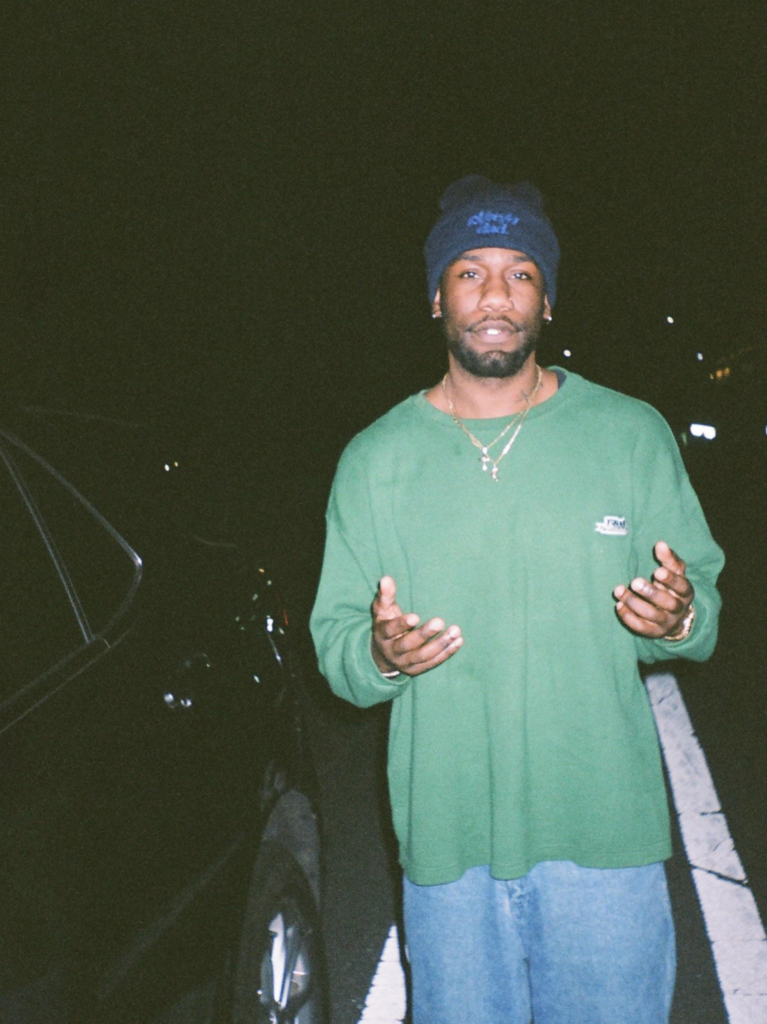
The music didn’t wait for the shows to end.
Phil. turned his dressing room at Hell’s Kitchen into a studio. His engineer would come through between performances. They set up a mic, interface, and speakers in whatever space they had. He recorded the bulk of what became his independent catalog in that room.
“I funded my whole project from Hell’s Kitchen,” Phil. said proudly.
His newest release “stay with me” started with a beat and a verse he had already written — the falsetto section. He brought in Jeremy Cousar, a friend from arts school, who had been writing music for years.
“I said, bro, do you want to just come by the theater and just work with me real quick?” Phil. told me. “He was like, yo, you should do something like — stay.”
“I said, dog, that’s crazy.”
They built the chorus together that night. Cousar laid background vocals. Phil. re-laid them. The ad-libs came in layers. The first verse Phil. built line by line in the moment, in the booth, with no script.
“I have a vibe,” he said. “I know where I’m going. Sometimes I just don’t write it. I’ll just go in and piece it together line by line.”
The costume designer from Hell’s Kitchen — someone he met on the job — became the person doing his embroidery now. She saw him working, saw what he was building, and offered to come with him.
“Stuff like that,” he said. “People showing up for me. It’s an amalgamation of people who just really been super consistent.”
His music director, Aaron Day, slides through every time there’s a show. One of his engineers, Leale, in Chicago — a friend of a friend who ended up in Atlanta — mixed and mastered the live version of “stay with me” remotely after Phil. recorded it with a band in Chicago on a trip back.
“My homie got a band together for me,” he said. “We got to recording it. Had a good time. A lot of fun in that space.”
The gap between what he’s built on Broadway and what he’s still building in music is real. He talks about it without flinching. Phil. has been working a shift at a coffee shop while he figures out the next chapter. He talked about the barista counter the way someone does when they’ve made their peace with it — not bitterly, but clearly.
“Social media got everybody fucked up,” he said. “People only really post their W’s. And if you’re an artist working a real job, it doesn’t feel like a W.”
He said he has to remind himself. That working a “regular job” is part of the process. That showing up — regardless of where — is what separates the ones who make it from the ones who don’t.
“The only people that don’t make it are the people that quit. Simple. Period. And I’m not about to be no quitter.”
That’s the gl/æ/d dad. ethos — named for his father and his stepfather, both gone now. The brand carries their absence. The music carries the weight of what he’s still working through.

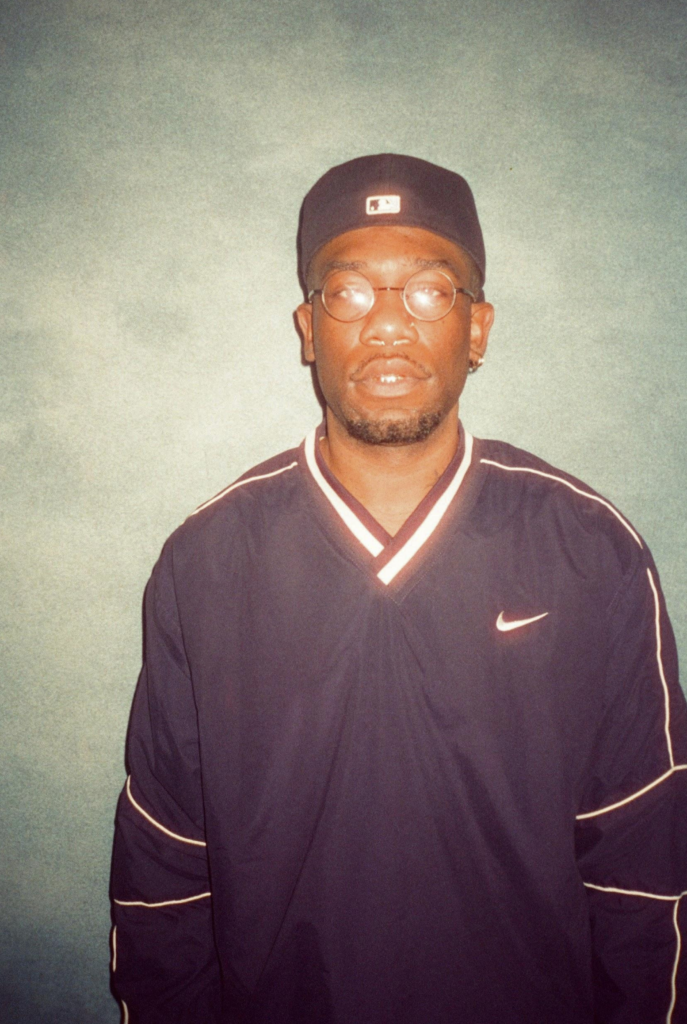
Before we wrapped, I asked him when was the last time he told himself he was proud of himself.
He paused. A long pause. The kind that tells you the question landed somewhere real.
“I don’t know, man,” he said. “I struggle with that.”
At that moment Phil. was being vulnerable the way he is in his music- emotionally direct.
That’s the thing about Phil. Richardson. The talent is obvious. The résumé is impeccable. But the most compelling thing about him is that he’s still in the middle of the story — working the counter, calling in favors, building the record, trusting the people around him — confidently. This is what legends are made of.
R&B has been trying to find its way back into our hearts for a while now. For the last decade or so it’s been chasing sounds and whatever the algorithm rewards this week. Phil. is building — record by record, relationship by relationship, one performance at a time.
gl/æ/d dad. is just getting started.
Stream his newest release “make it right/luv you all night” & get gl/æ/d dad.merch and all things Phil. at philsgoodmusic.com. If the music moves you, tell a friend.