
Milan Harris headlined the African American Chamber of Commerce of New Jersey’s Golf Classic. Her message to a room full of Black founders: get off the wrong train.
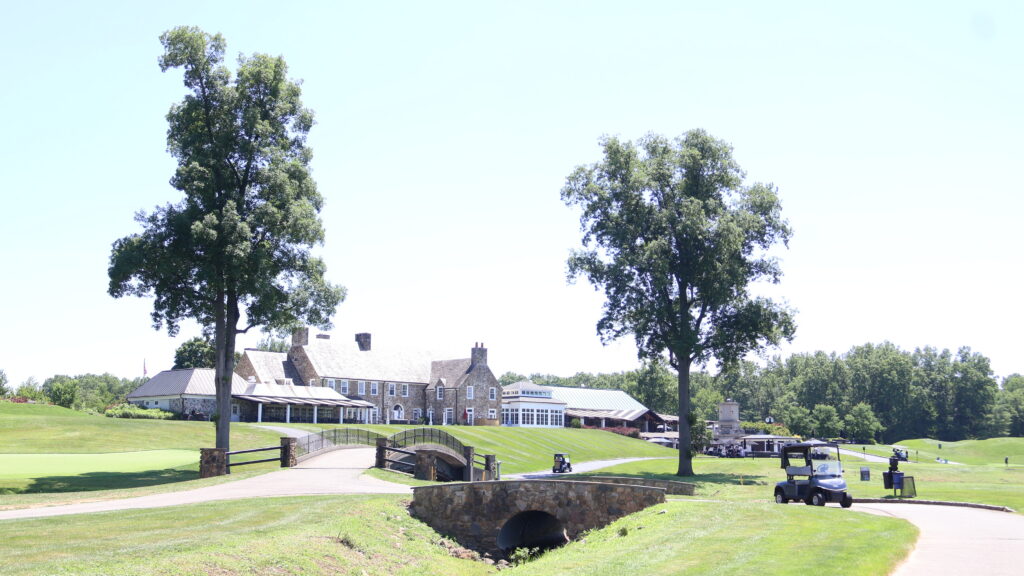
Fiddler’s Elbow Country Club has run 54 private holes in Bedminster since 1965, and most people never see the inside of it. The interior plays like a castle in your favorite movie — artwork everywhere, spiral staircases, rooms with secret exits behind bookshelves. On this day, Black founders, executives and elected officials filled the course for the chamber’s annual Golf Classic. The keynote came from Milan Harris, the Philadelphia designer who built Milano Di Rouge from two shirts and a used Altima into a nine-figure fashion brand.
On Assignment
Harris was transparent about what she’s had to sacrifice and how it could take a lifetime to become an overnight success. I asked how she stayed in the game when most brands fold inside a year.
“I’m on assignment,” she said. “I know that this is bigger than me, and it’s bigger than clothing. What God has for me is supposed to inspire and impact others’ lives. So I can’t give up.”
She has stopped before. Rebranded, restructured, walked away from what wasn’t working. I asked what part of the climb sits with her the most.
“The most satisfying thing about my journey is being able to stop and start over again,” Harris said. “Once you realize you’re on the wrong train, the further you keep going, the further away you get from the goal. Stop, get off, and get back going. You’re not a machine. You’re a human being.”
Once you realize you’re on the wrong train, the further you keep going, the further away you get from the goal.
— Milan Harris, founder, Milano Di Rouge

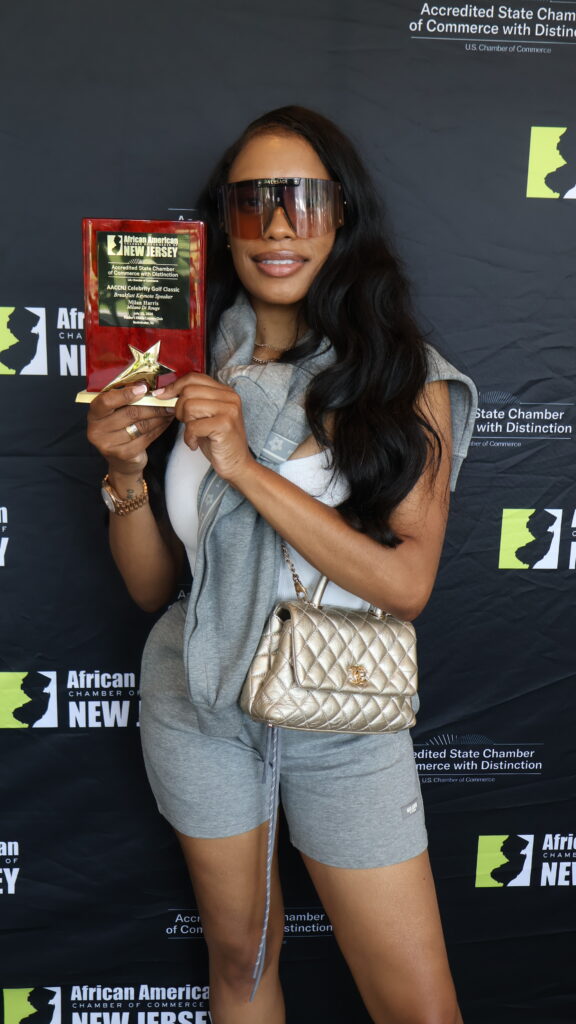
Nobody builds nine figures alone. I asked who she leans on when the map runs out.
“It’s so important to have a good team around you, a team of experts,” she said. She named Jackie P. Taylor as a mentor and Emma Grede, CEO of Good American, as someone she can text for advice. “I’m learning from everybody and everything.”
The room itself did something to people. Harris kept circling one word.
“It just feels free,” she said. “We got all these Black people on this big golf course, enjoying life. Free to dream, free to live, free to be authentically us.”
The Architect
That freedom was curated by Jackie P. Taylor. Taylor chairs the chamber’s community foundation, and the Golf Classic landed on her desk this year. She rebuilt the day for the people who don’t play.
“Normally we have the member-for-a-day option, for people who want the networking but aren’t necessarily golfers,” Taylor said. “We hadn’t curated any specific content for them. This year we did.” Cue Milan Harris.


The tweak registered before the scorecards came in. “The overwhelming theme I heard directly was, I don’t know what it was, but there was a different energy in the room this year,” Taylor said. She read it as proof the intent came through. “We did more than check the box. We exceeded our expectations.”
Taylor built the guest list like a supply chain. “There were people looking for jobs, suppliers, procurement leads, government leads,” she said. “That whole ecosystem was in that room, and we set it up in a golf environment, where we all know what happens on the golf course.”
Janei Holder was part of that ecosystem — a city council candidate in Elizabeth. “The atmosphere is incredible. Everyone is warm, receptive, open,” she said. “This is the space I want to be in.” She plans to join as a member and wants emerging entrepreneurs tied into their chambers, local and national.
Taylor framed the whole operation as one idea. “It’s an analogy for the chamber itself. We meet every business where they are, whether you’ve surpassed a hundred million like Milan, or you just started and you’re trying to get your footing.”
The Art on the Walls
The art that filled the main gathering area came from one vendor. Arthur Pickney’s melanin-rich pieces have decorated the chamber’s golf events for years. He has imported African art through New Jersey Arts World in Union for 35 years, and the pull is ownership itself. I asked what keeps him in it.
“It’s mine,” Pickney said. “It’s not something people can tell me I can’t do or fire me from. I’ve been doing it for 35 years.” He tied the day to a bigger idea. “Think about Black Wall Street, and the knowledge that African Americans can operate businesses in and of themselves.”
Power in Numbers
Viviana Lamm, who serves AACCNJ’s Community Board of Directors, put the mission in fewer words. “Power comes in numbers. That’s what the chamber does for Black and brown businesses, whether it’s contracting or just getting heard. Some people here today aren’t even members. We still push them forward, because it’s a mission. It’s not just a chamber.” She credited Dr. John E. Harmon Sr., who founded the AACCNJ in 2007 and speaks for the state’s 1.1 million Black residents and 70,000-plus Black-owned businesses. “He represents more than a chamber. Twenty years of helping people get to the next level, because he’s walked those steps.”
Room for Everybody
The morning’s keynote left a mark on Tanya Freeman.
“Black women supporting Black women is what it’s all about,” Freeman said. “Somewhere along the way, we got this mindset that there’s only room for one of us, and we’re elbowing each other out. If there’s one seat, there could be two, there could be three. The sister who comes behind me can learn from what I stumbled on.”
Freeman shared her takeaways from Harris’ keynote speech. “She talked about starting her business from the trunk of her car, and now it’s a multimillion-dollar business, having the right people on her team, but also not forgetting her God-given purpose,” Freeman said. “And while you’re doing all of that, remembering to help your sisters out.”
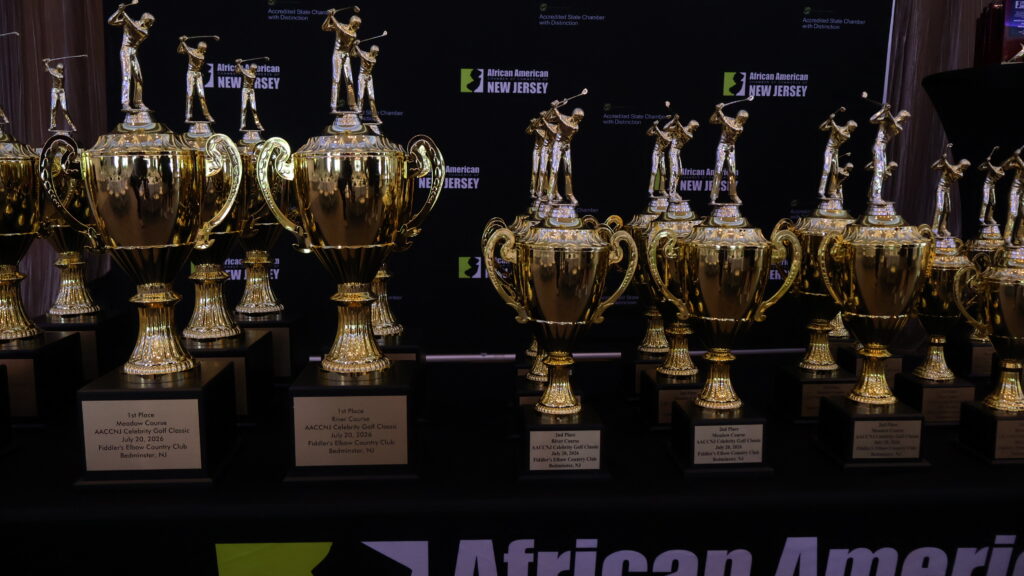
The chamber handed out awards, the way it always does. Taylor has a theory about why that matters. “Gratitude and chaos cannot coexist,” she said. “If we can put everyone in that room in a spirit of gratitude, there’s nothing but positivity that can result.”
Gratitude and chaos cannot coexist.
— Jackie P. Taylor, AACCNJ Community Foundation
The Move
Build something they can’t take from you, then pull the next one up behind you. The African American Chamber of Commerce of New Jersey runs on the ecosystem Taylor described — founders, suppliers, procurement leads and government contacts in the same space, moving each other to the next level. That table has open seats. Take one at aaccnj.com/join-the-chamber.