







Newark poet celebrates ‘Poems For My Namesake’ with sold-out bake sale and literary love
The year was 2011. I was invited to perform at an open mic at what was once Cafe Eclectic in Montclair. I left the stage feeling like I conquered the night. Then a unicorn strutted to the spotlight. K. Desireé Milwood, with a collection of 300 haiku poems, controlled the vibration of the cozy coffee shop. I sat in amazement as she made the audience feel every emotion—from sadness to laughter and everything in between. With one performance, the Haiku Guru sent me on a journey to explore the Japanese style of poetry. I now have notebooks full of haiku.
On Nov. 1, 2025, I walked into Marco Hall’s Halsey Street Boutique and found that same unicorn—this time surrounded by lemon drop cake pops, signed books and a room full of people ready to celebrate her two passions: poetry and pies. The legendary location smelled like vanilla extract and love.
The Party That Took Nine Years
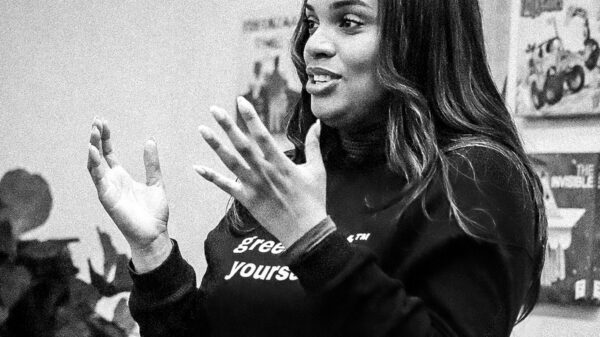
K. Desireé stood in Marco Hall’s legendary boutique, celebrating what should have happened in 2016. Published that year, Poems For My Namesake launched quietly—no team, no launch party, no fanfare. But Newark’s literary community showed up nine years later to give her the flowers she earned.
“I wanted to write a book in 2009,” Milwood said during the event. “I put this book out in 2016, still not knowing the rules—that you have a launch party, that you have a team, all these other things.”
For Milwood, a 20-year veteran of Newark’s poetry scene, the nine-year milestone represented completion and permission to finally claim space.
“The world is very sad right now, so I’m looking for any opportunity to throw a party,” she said. “A nine-year-old book without a celebration is a travesty, so let’s fix it.”

The Alchemist
What makes Milwood dangerous is her mastery of form and her ability to convert skeptics. She also has the uncanny power to convert Newark rappers into haiku practitioners.
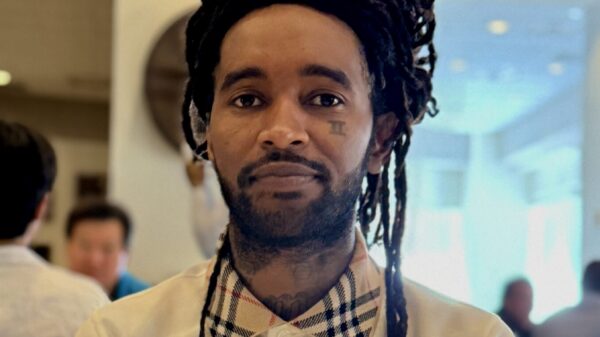
Hip-hop artist Real As Promised came to support Milwood, crediting her with shifting his creative practice. “Since I met K. Desireé, I too have been inspired to do haiku,” he said. An MC to his core, he now organizes his haikus by theme—mental health, love, finance, masculinity.
I’m evidence of her influence. After that 2011 performance, I’ve filled notebooks with haiku. So has Mikumari Caiyhe, another rapper(poet and entrepreneur) who credits Milwood with introducing him to the form. In a genre built on 16-bar verses and hooks, she convinced us that it’s possible to say more, by saying less.
How? She studied. Amiri Baraka’s “Low Coup.” Sonia Sanchez. Nikki Giovanni. Lucille Clifton. She learned the difference between haiku and senryu, between tanka and senku. This year, she taught her first formal haiku class.
“I think my own insecurity of being a college dropout and being in this word-rich environment—I’m with the smartest people in the room,” she said. “So I have to know what the room is talking about and recognize style and study the thing that I say I want to do.”
People who discovered her book years ago still recite poems back to her. One city planner recently called to share favorites over the phone. The work endures because it was built on commitment to excellence.

Feeding Bodies and Souls
Janetza Miranda described Milwood as “phenomenal author, phenomenal poet, haiku guru, singer.” Then she paused. “I don’t know what she doesn’t know how to do at this point because she even bakes.”
The baking and poetry go hand in hand. Both are acts of nourishment. The Brooklyn-born poet has been the family baker since childhood, evolving from boxed cake mixes to custom creations. At the anniversary event, attendees left with signed books and full bellies—fed twice. The sold-out bake sale featured flan, thyme and lemon olive oil cake, and matcha and chocolate fortune cookies.
Photographer Inisa Jefferson framed the celebration differently. “It’s great to see her realizing how she’s blossomed when she couldn’t see what was happening under the ground. Now that it’s above the ground, she’s witnessing it.”
The venue was intentional as well. Marco Hall is a walking master class in perseverance—a Newark institution. His Halsey Street boutique houses decades of fashion archives and represents the kind of creative infrastructure artists need to thrive. Celebrating poetry in a space dedicated to fashion speaks to Newark’s interconnected creative economy.
“To admire somebody and meet them and not be disappointed by the person that they actually are—it’s so very rare,” Milwood said of Hall.
The Pivot
Last October, the Panamanian American poet lost her job. Instead of panic, she found clarity. The work she was good at wasn’t the work she loved.
“I’d like to be delusional enough to think that poetry and baking cakes and singing sometimes would be enough to sustain a life,” she said. “And I think I’m going to operate in that delusion for a little while.”

It’s working. The pop-up sold out. Attendees included poets, photographers, musicians and community members who simply wanted to witness someone claiming their worth.
K. Desireé is already planning the next project—a book tentatively titled Mirrors and Mason Jars, blending baking and poetry. She’s applying for residencies to study community building through art.
As Miranda said, “This is what community looks like. This is all about community. She’s all about nourishing.”
The cakes are gone. The books are signed. A celebration delayed isn’t celebration denied—sometimes you have to throw your own party.