





Perry “The Maestro” Thompson Wants Black Music on the Syllabus by 2030
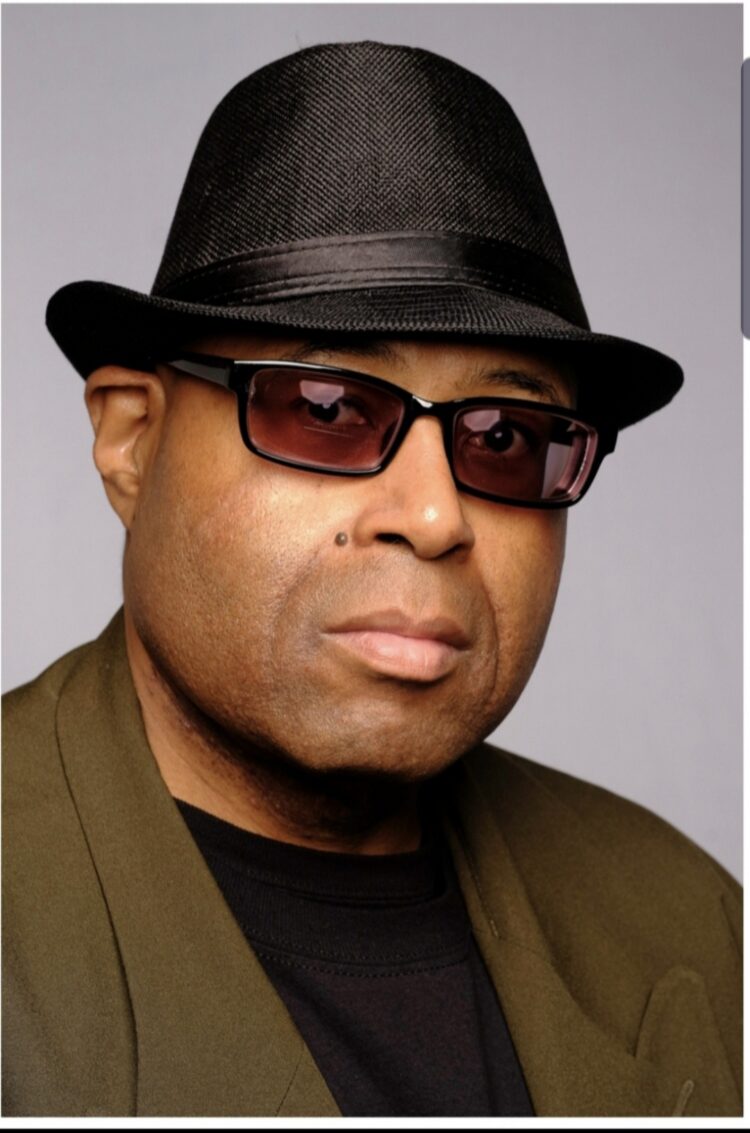
Perry Thompson learned to read off the back of a record.
Legally blind, Thompson was raised in Queens by parents who came home with albums every Friday. He could not yet make out a book. The covers carried lyrics. The sleeves carried liner notes. “That’s how I taught myself to read,” he says. “I taught myself to read from the records.”
Those records also carried a lineage that gave Thompson a sense of belonging. Blues and gospel labels once printed the disability directly on the sleeve and sold it as a credential: Blind Lemon Jefferson, Blind Willie Johnson, Blind Willie McTell, Blind Blake, Blind Boy Fuller. Call it a market gimmick and you would be right. Call it the only door on the street that opened for a blind Black man with a gift and you would also be right. Art Tatum went through it. Ray Charles went through it. Stevie Wonder went through it. Thompson grew up on the other side of it, listening.
Music was the one field that never required him to see. He enrolled at Fiorello H. LaGuardia High School of Music and Art and Performing Arts, the audition-only public school in Manhattan that the movie “Fame” was built on, where teenagers compete for seats the way athletes compete for scholarships. He studied the technical side of the business, the board rather than the stage, in an environment that trains people to be looked at.
Atlantic City
The vision sat with him for years before he acted on it. “I had this idea for a number of years,” he says, “but in 2017 I got a sign from the ancestors.” The Rhythm and Blues Preservation Society (RBPSOC) launched the following year. “Black music has influenced every genre of music,” he says. “Even though Black music is a global phenomenon, there are still artists out there, past and present, who never got their just due.”
Eight years on, the RBPSOC operates out of Atlantic City on volunteer labor and a budget most households spend on a used car. The mission fits on a business card: preserve Black music culture, one record at a time.
Atlantic City earns the address. In 1954, a classically trained pianist named Eunice Waymon took a bar gig on Pacific Avenue and needed a stage name so her mother, a Methodist minister, would not find out what she was playing. She walked out of that summer as Nina Simone.
Since 2022, Atlantic City has designated Feb. 21, Simone’s birthday, as Rhythm and Blues Preservation Society Day. The proclamation came from then-Mayor Donald Guardian; that same year, then-Gov. Phil Murphy issued a separate letter of support for preserving Black music culture in New Jersey. “We’re very honored to have that bestowed upon us,” Thompson says. “And we eventually want to have it not just for Atlantic City — we want the entire day for New Jersey. That’s our goal.”
Seventy-two years after Eunice Waymon became Nina Simone here, the city has a date on a calendar and no permanent institution to house the history. Closing that distance has taken eight years and is not finished.
The Money
The RBPSOC’s honors run on a standard the record business does not recognize. Sales figures do not qualify anyone. Neither do trophies, chart position or name recognition. “It’s not about how many records you sold or how many awards you won,” Thompson says. “If you contributed to Black music culture, we honor you.” The people he’s describing are largely the ones the industry moved past while they were still working. “We honor those who didn’t get their roses while they were here on this earth,” he says.
Thompson watches money generated by Black music circulate everywhere except back to the people and places that produced it. Black sound sells cars, sneakers and soda, a fact every marketing department understands and prices accordingly. He objects to the terms rather than the transaction. “If you’re going to use our music to promote your business,” he says, “put some of that money back into Black people. Put it back into the arts in the schools, particularly in the urban areas.”
For the artists themselves, the arithmetic is worse. Recordings made before 1972 sat outside federal protection for digital performance royalties until Congress acted in 2018, which left the generation that built the sound unable to collect across the entire first stretch of the streaming era. Most never held their masters either, a condition the business worked to keep them ignorant of. “They always told Black artists you make your money on the road,” Thompson says. “That’s not true. You make your money publishing your own music. But they didn’t tell Black artists that.”
The consequences are not abstract. Thompson has seen the results firsthand. “You’d be surprised,” he says. “I’ve met musicians who played in jazz bands and R&B bands with the major artists, and they’re living in nursing homes.” The RBPSOC’s published services include advocacy for veteran R&B and soul artists on royalties, hall of fame induction and health coverage, which places it closer to a labor organization than a heritage society. Thompson extends that to mental health, a subject the culture spent decades declining to name. “Mental health was never really a discussion in the Black community,” he says. “But artists suffer from depression. They should have the proper facilities, insurance and programs.”
The Classroom
The longer play is the classroom. Thompson wants Black music taught as an academic subject, tracked from 1619 forward, spirituals into blues into jazz into rock and roll into soul into hip-hop. He is pursuing it while districts cut arts programs and while HBCUs, the institutions that produced much of the canon, report the same shortfalls. The RBPSOC lectures at universities, mounts library exhibits across the United States, Canada and the United Kingdom, and is developing youth workshops, including a program with the New Jersey attorney general’s office aimed at formerly incarcerated young people. Music history, deployed as a reason to stay out of a cell.
That fight now has a federal companion. On June 18, Sen. Cory Booker submitted a Senate resolution designating June 2026 as Black Music Month, cosponsored by Sens. Dick Durbin, Chris Van Hollen and Amy Klobuchar, recognizing Black Americans’ contributions to the country’s musical heritage and calling for greater access to music education for Black students. Thompson’s statement of support was carried by outlets including Texas Metro News. The resolution currently sits in the Judiciary Committee.
The deadline is 2030: African American music studies on real syllabi, in K-12 and in higher education. Carter G. Woodson launched Negro History Week in February 1926 on a single premise, that a history left out of the curriculum eventually disappears. A century later, Thompson is running the identical play on the music.
Succession
The RBPSOC has not been a solo operation, and Thompson corrects anyone who frames it that way. His vice president and chief curriculum officer, Rev. Dr. Sonja Elise Freeman, also known as Queen Diva, builds the curriculum, curates the brand and has been with him six years. He vets partners on one criterion. “You have to be careful who’s in your circle,” he says. “If they don’t see the vision, it won’t work.”
On the subject of his own accolades, he goes flat. “I don’t gloat about what I’ve done,” he says. “I just do it.” The recognition arrives later, usually from someone reading the record back to him. “They say, ‘Oh, you did that?’ Yeah. I think I did.”
Ask about the legacy and the deflection stops. He does not describe a building, a tribute or a plaque. He describes a syllabus.
“We want a curriculum in the school system, in the colleges and universities. That’s our goal by 2030,” he says. “So we can leave that mark. Fifty years from now, our curriculum is still being used.”
The Rhythm and Blues Preservation Society operates on volunteer labor and public attention. Follow @RBPSOC on Facebook, where the lectures, library exhibits and honors are announced first.