



How Winston Gilley Built a Way for Musicians to Earn More Than $0.003 per Stream
The first beat Winston Gilley ever made got laughed at. This was upstate New York, early 2000s. His friend John Barney used to sleep over and make beats on the family laptop — a souped-up FruityLoops loaded with Timbaland packs. Then Barney moved away in 10th grade, and Winston went down to the basement alone. He sent his first track to a friend. The friend told him it was horrible. So he made another one. By the third or fourth, his friends wanted to rap over them.
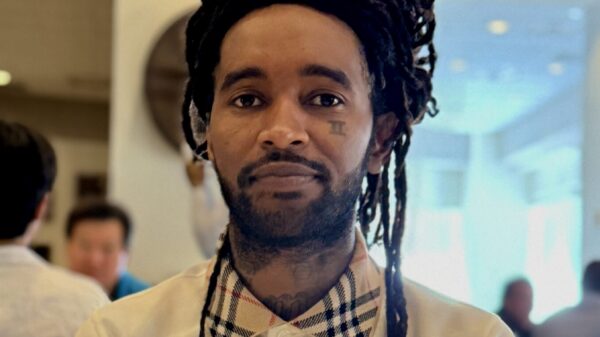
Twenty-some years later, Winston is on a video call with me, fresh off his 38th birthday, sharing his screen. What he’s showing me took three years to build, and I’ve been present for most of them. We open the way we always do — talking about success before we talk about anything else.
“Success is not the destination,” I tell him. “It’s truly the journey. There’s some people who reach a destination and realize they don’t even want to be there no more.”
“That’s a fact,” Winston says. “To me, success is not just getting to the destination — it’s creating a route where I can enjoy the process while I get to the destination.”
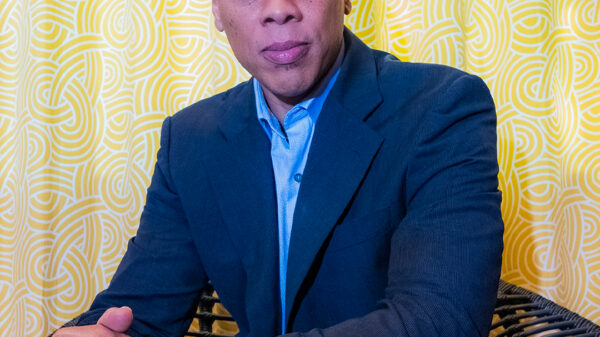
Full disclosure before we go further: I’m the first artist on the Artist One, the platform Winston spent the last three years building through his company, Reetune. My catalog is the demo. I’ve been in the trenches with him since this was a landing page, and this conversation is between an artist and the founder — a journalist third. Read it with that in mind. I’d argue it’s exactly why you should read it.
The Education
Winston’s road ran through Full Sail University in Florida, where he enrolled in recording arts intent on becoming a producer. His mother talked him into staying an extra year for the music business program. That year rearranged his life.
“Full Sail is real-world education,” he told me. “It was a 10-month course of: this is exactly how it works, whether you like it or not.” He walked out at 20 with a conclusion most artists take decades to reach. “I love music, but I didn’t love the system behind the music business.” He compares it to a ballplayer who loves baseball, reads the league contract front to back, and starts asking how to keep playing without joining the league.

I know that refusal. My distrust of the popular streaming platforms came before I ever saw the numbers. I’ve been in the community my whole life, and I couldn’t communicate with my people on those platforms. Something was wrong before the math confirmed it.
Winston’s math is worth sitting with. Most of the artists we love, we love between roughly 18 and 28. Labels know it. That’s why the rookie deal exists — the five-album deal signed when an artist has zero leverage. “How many artists you know have more than five albums?” he asked. “If my first deal is essentially my only deal, how am I ever building leverage with my music? By the time I get to the second deal, all my best music is already done.” Then the line that should be taped to every studio door:
“Your best body of work is on the worst deal possible.” — WINSTON GILLEY
The independent route carries its own trap. By Winston’s count, more than 11 million creators have posted music to Spotify, about 1.7 million of them with 10 or more records — while the major labels sign somewhere around 12,000 artists between them. Those 12,000 get the marketing muscle, the distribution monopoly, the algorithm’s attention. The other 1.7 million fight for scraps priced at fractions of a cent per stream.
The Trenches
Winston wanted his own platform in 2009. He paid a web designer to build it, then discovered he couldn’t maintain what he’d bought. “It was going to be an endless pit of money,” he said. So he shelved the idea and ran a studio at the NC Music Factory in Charlotte, watching independent artists work themselves raw for almost nothing.

The idea kept knocking. No-code tools taught him foundational code over the next several years. Then, late 2022, he found FlutterFlow — built on Google’s Dart language, it let him design once and deploy to web, iOS and Android simultaneously.. A mentor from his Charlotte days had already handed him the principle that made the choice obvious: keep your tech stack congruent, so you never have to start over.
He quit his call center job and told himself the build would take two months. That two months turned into three years. I lived those years alongside him — watched the delays, the versions, the patience. I reminded him of something we’d laughed about before, a filmmaker who announced his movie was 90 percent done. He underestimated the gap between 90 percent and 100.
“That’s the hardest,” Winston said. “That last ten. And what they don’t talk about is the 99 percent to the hundred. That’d drive you crazy.”
Watching him work rearranged me, too. Being on this train with him is part of what allowed me to fully embrace being a journalist. I told myself I’d wait to release music until the platform was ready, and the waiting built my media career. Winston pivoted from producer to engineer to founder — three different languages. He learned each one.
The Canvas
On the call, Winston shares his screen and explains the Artist One the way a painter explains a canvas — his metaphor, not mine. “There’s a canvas, there’s the paint, and there’s the artist,” he says. “Think of the platform as the canvas. The artist is you, and all your music and content is the paint.” What he’s describing is your own streaming platform. Your name, your domain, your rules.

Your pricing, your terms. The first thing Winston hands the artist is control of the money. You set the subscription — free, weekly, monthly, yearly — and you set what it unlocks. On screen he builds a plan in real time: a recurring tier at $2.99 a month, a free tier beneath it, access levels stacked however you want. “You’re not tied into any streaming rates or anything else,” he says. “This is your platform. You control all the pricing.” Payments run through Stripe, so the artist never touches a fan’s card data. “As an administrator, you don’t have any access to anybody’s card information, any sensitive information at all. That’s directly going to Stripe.”
The catalog that plays like you built it. My favorite feature is a single button. Load Album plays the entire project in sequence — no buffering, no interruption, the order you intended. I told Winston it reminded me of the New York City subway: you go into those underground tunnels and your service dies. An album should never do that. Singles get their own section, with a shuffle that pulls from your own catalog.
Everything under one roof. Music, video on demand, a full merch store, events, and livestreaming all live inside the same platform — and that’s deliberate. Winston’s whole case rests on the war for attention. He estimates people see thousands of marketing impressions a day. Once an artist finally gets a fan to show up, sending them off to YouTube for the video and Shopify for the merch is how you lose them. “The fact that someone is even making a decision to go to where you’re at — that is a home run. Why am I gonna tell you to go somewhere else?” The merch store manages its own inventory. The livestream button lets an artist go live from inside the app and drop a notification to their subscribers — no third party required.
The Back End
The Artist One isn’t built only for the solo act. One login can house a roster — multiple artists, their catalogs, their events, their profiles — run as a collective or a full independent label.
Then Winston opens the back office, and this is the part most artists have never seen for their own music. Monthly active users. Returning-listener rates. Per-song engagement. Thirty-day earnings. A 12-month revenue spread laid out like a chart. He explains why it matters with a scenario: an artist who grows revenue from $500 to $3,500 in seven months isn’t a “$3,500 artist” — they’re an artist who 7x’d their income and can prove it. “No one can bamboozle you on your actual value,” he says. That data is leverage whether you stay independent or sit across from a label. It’s also, as I told him on the call, the thing that turns an artist into an entrepreneur. We are entrepreneurs, no matter how we slice it. Most of us just never had the dashboard to behave like one.

Twice during the walkthrough, the app breaks. A subscription plan he builds on screen never populates. The shipping flow runs clunky. Winston doesn’t flinch or cut the demo. “I’m glad that happened,” he says. “Jimmy is literally the very first artist with the Artist One. As certain things happen, I get to see them for the first time.” Both get fixed within the hour, and catching them now is the entire point of going slow. “Those are just things you go in and fix before I sell this to artist number two, artist number three, artist number four.”
Setup takes a day. He’s targeting 500 to 1,000 artists in his first year, and he’s blunt that it won’t fit everybody. “I’m not anti-record label, anti-streaming service at all. Everything has a role.”
The Wake-Up
Here’s the part that should cost you sleep. Winston believes we’re entering the age of the solopreneur — one person, armed with AI and modern tools, scaling themselves. He built the Artist One alone. In that world, renting your audience from an algorithm is a liability, and assuming your followers are fans is a fantasy.
“It’s like seeing a girl you like and never asking her on a date,” he said. “Then you finally ask, ten years later, and you realize she’s married.”
The cure is smaller and harder than going viral. “I’d much rather know I got eight real fans than assume I have eight thousand,” Winston told me. “Eight can turn to sixteen, and sixteen can turn to thirty-two. But I gotta know who the eight are.”
I told Winston about my scraps. I logged into a distribution account I’d forgotten I had and found $16 waiting. My first reaction was a joke — I’m about to buy everybody some french fries. My second reaction was arithmetic. Think about how many $0.003 streams it takes to reach $16, then weigh that against thousands spent on studio time and marketing.
So I believe him, and I’m betting on it. You don’t have to go platinum anymore. You can feed your family and cover your bills off a thousand real supporters — maybe five hundred.
I featured on a record that dropped this past June. I’m proud of it. But I’ll be honest — I haven’t given my own music the attention and love it deserves. I’ve been pouring into the newsroom, into other people’s stories, into building this. The Artist One is what lets me change that. It lets me release on my pace, at a price point that fits my life, without asking anybody’s permission. My Artist One is live at mrjamesrashad.com.
Winston’s wider rollout lands between now and early August. If you make music — or you know somebody who does — follow Reetune on Instagram to catch the release schedule. Then send this to the artist in your circle who’s still selling their best work for $0.003 a play.