











The Missing Peace Collective’s Free Prison Visit Bus Cuts Reconviction 13%
Nearly 40% of people leaving Minnesota prisons never got a single visit. Cicero Taylor and Khalia Jackson-Taylor built a bus line to close that gap, free.
The first trip went to Shakopee, Minnesota’s women’s prison. Cicero Taylor remembers the mother more than the road.
“The mom started crying, I think, before we pulled up,” he said. “As soon as we pulled up in the parking lot, she started breaking down crying, ’cause she ain’t seen her daughter in a couple years.”
Taylor had spent years on the other side of that visit. He knew what waiting on a name to be called felt like from inside. He had never watched a parent arrive.
“We never see what these parents go through while we’re in prison,” he said. “So it’s kind of like, damn, did my people miss me this much too? I wonder if my mom was crying on her first time coming to see me.”
That question drives The Missing Peace Collective, a Twin Cities nonprofit Taylor runs with his wife, founder Khalia Jackson-Taylor. Its flagship program, Reconnect, puts families on a used school bus and drives them, free, to three Minnesota correctional facilities every month: Rush City the first Saturday, Shakopee the second, Lino Lakes the third. Taylor bought the bus. His uncle drives it. The couple paid for gas and insurance out of pocket for most of the program’s first year.
What the outside carries
A sentence is handed to one person and served by everyone who loves them. Somebody’s brother is gone. A wife, an uncle, the sister who used to pick up at 2 a.m. Birthdays keep coming. The seat at the table stays where it is. Then there’s the visiting room, two hours out, and a family trying to work out how to reach it: a day off, a car that will make the drive, the wait at processing, an hour at a table with a guard in the corner.

Minnesota’s own numbers show how often families never make it there. The state Department of Corrections studied 16,420 people released between 2003 and 2007 and found nearly 40% of them had received no visits at all. The same researchers later confirmed what families already knew: visits drop as distance grows.
Taylor learned the cost from inside. A year into his sentence, his childhood best friend was killed. He stopped talking to his friends. Two years later, his brother was killed.
“So I stopped talking to all my family,” he said. “I dealt with it on my own and just did what I had to do. I literally lived day to day. I didn’t keep no calendar. I still live day to day now.”
He treats that isolation as a habit the system teaches and the community pays for later.
“It is not normal to go years without seeing your family,” he said. “You probably talk to your family every day. So it is not normal to go somewhere and not see your family for years. What I’m doing shouldn’t be as big, because seeing your family member should be normalized. I don’t know how we got to a point where people stop going to see their loved ones.”
The state already knows this
The evidence for what Reconnect does sits on the Minnesota DOC’s own website. The department’s research director, Grant Duwe, co-authored the 16,420-person study. It found that a single visit cut the risk of a felony reconviction by 13% and the risk of returning on a technical violation by 25%. Visits from siblings, in-laws and fathers helped most. The National Institute of Justice rates the finding “promising.”
The stakes reach past the person inside. Between 1.7 million and 2.7 million American children have had a parent incarcerated, according to the National Institute of Justice, and the Economic Policy Institute finds Black children are six times as likely as white children to live through it. Minnesota lists Reconnect in its own state resource directories. The state sends families to a bus it does not fund.
Two sides of one wound
Taylor is direct about who built the organization.
“It was really created by my wife,” he said. “She started it. She has a curriculum from the time of birth all the way to time of death.”

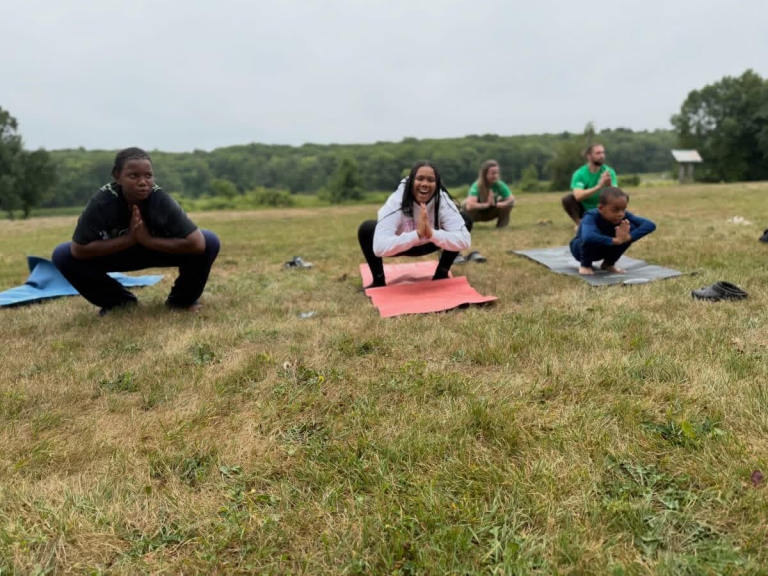
Jackson-Taylor spent nearly 12 years in early education before founding the collective in 2024. She trained in early development and psychology, holds a master herbalist credential and wrote what she calls the Orbital Approach to Wellness, a curriculum built for what the organization terms justice-impacted individuals and families. Before the bus existed, she was already inside Minnesota facilities running Back to the Roots: gardening, yoga, sound baths and herb planting in a building designed to feel like anything except home.
Her entry point was childhood.
Jackson-Taylor described the work in her own words in a written statement.
“Offering Reconnect and Back to the Roots has been an opportunity to encourage healing in other justice-impacted families, but also my own,” she wrote. “MPC creates a community where there is no stigma, judgment or condemnation for mistakes. We allow the whole family to experience true healing through community.”
She ties the programming directly to her own childhood.
“Turning our lived experiences into mission-driven programming has been the ultimate healing experience for my inner child,” she wrote. “I will forever be grateful for the opportunity to support justice-impacted families.”
Asked how he and his wife ended up building the same thing, Taylor pointed at a visiting room neither of them chose. “She was affected by having a parent that was incarcerated and not being able to go see them, and I was a person that was incarcerated and not having my kids come see me,” Taylor said. “We were affected by the same thing, just from different sides.”
No installment plans
The bus was his idea, carried out of prison. He pitched it to her like a business partner.
“I told her, ‘Hey, I want to tell you about this idea I had when I was in prison, and maybe you can present it to the prison as well,'” he said. “She ended up writing it up and presented it to the prison. We ended up having meetings, and that’s how it started.”
The bus had been parked for a couple of years before Taylor asked the owner to sell. There was no financing conversation.
“This is how much we want, no installment plans, none of that,” Taylor recalled being told. “When you got the full price, let me know.”
Inside the operation, the labor splits along temperament.
“She’s my other half in a different sense, ’cause we got two different personalities, we got two different skills that match,” he said. “She’s more intellectual. She’s doing the research, filling out papers, while I’m really doing the groundwork, networking. I’m the personality.”
That division nearly cost them their biggest break. In late spring, @Joshlilj, a content creator who films people doing unpaid public good, asked Taylor on a day’s notice to shoot a segment. Taylor wanted 24 hours. His wife did not negotiate.
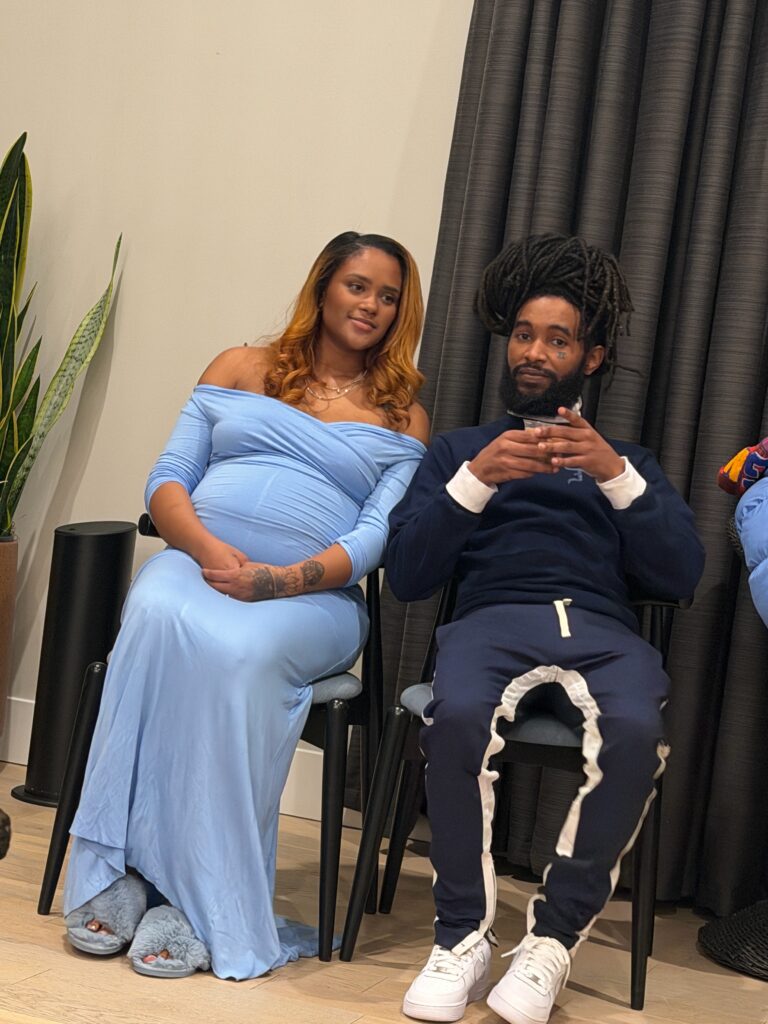
“She was like, ‘You bet not miss that. You better go do the video,'” he said. “And I would have probably missed out on it, honestly.”
The video traveled. Donations followed from strangers on several continents, and for the first time the collective could plan a week ahead without checking the gas budget.
“The video changed our lives,” Taylor said. “People donated from all around the world.”
Building without the box
The collective has applied for grants. It has stopped chasing them.
Part of that is the climate. Minnesota is still digging out of Feeding Our Future, a pandemic-era nonprofit fraud federal prosecutors put at roughly $250 million, with a string of Medicaid and social-service investigations trailing behind it. Small Black-led organizations felt the money tighten first.
“Unfortunately, as being the color we are, that was money that was stole from our communities, money that was stole from organizations like us,” Taylor said. “But we knew this going in. We knew it wasn’t no money on the table.”
His deeper objection is structural.
“When you get grants, you can only do what you get the money for,” he said. “It limits you year to year, and a lot of organizations become grant-dependent. A lot of organizations have been dissolved because of the fraud stuff, because they became grant-dependent. They weren’t fundraising.”
West Ward Beans asks every organizer in its 100 Nonprofits series the same question: $50,000 lands tomorrow, no strings. Where does it go? Taylor answered without a pause.
“First thing we’ll do is get more buses, and we’ll hire an outreach team so I’m not doing that as well as the other programs,” he said. “We’ll pay our insurance, we’ll put money aside for gas, we’ll start providing food for these families on these trips. And we’ll go to every prison.”
Starting over, every time
Expansion has already begun. After the video, Taylor drove a family from Minnesota to North Dakota. His younger sister was on that trip. She had not seen her father in about five years, and he was headed before the parole board with a visit needed on his record.
The drive produced a meeting with a deputy warden and, from that, a formal partnership. Reconnect now lists a North Dakota run to James River Correctional Center for Nov. 13-16, structured as a quarterly trip because families need hotel rooms.
“The plan is to expand everywhere that is needed,” Taylor said. “But it also comes down to how much we are able to do realistically, and the resources, the connections, the support in each city. It’s kind of like starting over everywhere, every time.”
Who actually shows up
The allies who have shown up most are the ones who recognize him.
“The biggest support has been from people that look like us that’s in these positions,” he said, describing the director of the unit his organization partners with as a Black man who served time and worked his way up through the system. “It’s been a lot of Black people in these higher positions that we meet with that have really given us an instrumental amount of advice.”
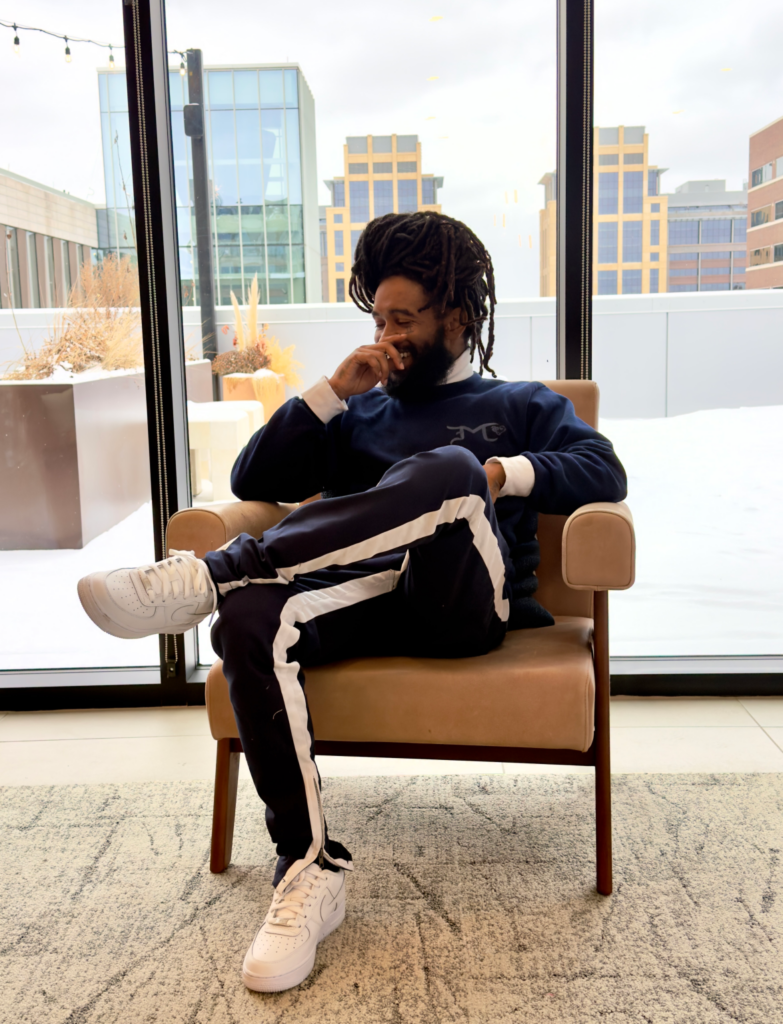
Asked what he would tell someone with a record who wants to build something like this, knowing which doors will close first, Taylor gave the answer he gives himself.
“Align yourself with God,” he said. “When you walk in your faith and you really find your passion, what your mission is, as long as you don’t get deterred from that, you should be good.”
He knows the alternative from experience.
“You might have times where you want to give up or revert back to your old ways,” he said. “Those be the moments you gotta keep straight.”
The next bus leaves for Rush City on Oct. 10, Shakopee on Oct. 17 and Lino Lakes on Oct. 24.
The Missing Peace Collective runs at thempcollective.org, where families can register for a seat and readers can join the newsletter. Donate today. Put gas in the tank and help somebody reclaim their peace, even for an hour.