









Apple TV’s “Being Heumann” filled the DGA Theater in New York with the story of Judy Heumann and the 504 sit-in
In 1977, Judy Heumann and more than 100 disabled activists occupied a San Francisco federal building for 26 days, refusing to leave until Washington enforced Section 504 of the Rehabilitation Act. It became the longest occupation of a federal building in U.S. history. The Black Panther Party kept them fed, running one hot meal a day into the building for the length of the sit-in. Brad Lomax, a Panther with multiple sclerosis, built that bridge. The win belonged to a coalition.
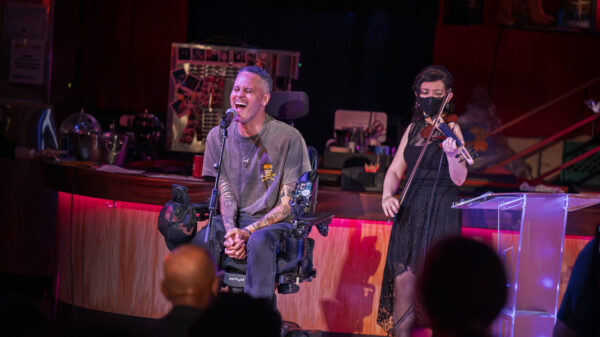
That history sat in the room at the DGA Theater on 57th Street, where Apple Original Films screened “Being Heumann” ahead of its Nov. 13 release. Siân Heder, who won an Oscar for “CODA,” directs. Ruth Madeley plays Heumann. Casting director Adam Caldwell stocked the cast with disabled actors. All three took the stage for a panel after the credits.
Heder was direct about her timing.

“We’re in a time right now where a lot of people feel really helpless and really disenfranchised, and there’s a collective exhaustion about how you fight or where you fight,” she said. The film answers with bodies. “It’s a story about a time when people put their bodies out there in protest collectively, and they actually made real world change. We need that right now.”
The set embodied the principles in the film. Heder built ramps across the production and watched the whole crew use them. “It turns out building ramps everywhere helps out everybody,” she said. She also noted that there was one accessible trailer in all of North America. So the production built its own, with a lift on the back. Michael Patrick Thornton, an actor of 30 years, entered a hair and makeup trailer for the first time in his career and broke down. “I’ve never been in here,” he told her.
Caldwell built the cast off a premise the industry keeps dodging. “There’s people out there, if you let us look for them,” he said. He and Heder ran the ensemble from first-time disabled performers to names like Mark Ruffalo, who plays Joseph Califano, the official who stalled the law: 12 disabled leads, about 20 disabled speaking roles, roughly 60 disabled background actors. When the actor cast as Ron Washington had a medical emergency a week before shooting, they brought in D’Arcee Charington Neal, a Black disability studies scholar making his screen debut, who, in Heder’s words, “just came and did the movie.”

Heder and her team kept Heumann, well, human. They built the woman behind the icon, “sexual and funny and insecure,” Heder said, sharp enough to snap a line the film draws from Judy’s real fights: “I shouldn’t have to be nice to people to have them help me.”
Heumann and Ed Roberts became the movement’s public faces. Lomax and the Panthers who sustained the sit-in are still working their way into the wider record. This film puts them in the frame: Antwan Tolliver plays Lomax, and Ray Fisher plays Chuck Jackson, the organizer who helped bring the Panthers in. A studio release with awards-season weight now carries those names to a global audience.
Lynette Taylor, an American Sign Language interpreter portrayed in the film, was raised by deaf parents with ASL as her first language. Taylor was a San Francisco college student when word reached her that the occupation needed another interpreter. She dropped out and walked in, and she stayed for the sit-in. Nearly 50 years later she signed the DGA panel from the stage and carries several minutes of the film, a woman interpreting a conversation about the room she lived in.

“Time folding in on itself,” she said, “and in a way that’s so powerful because the city keeps on giving. I’m watching this world be recreated, and so you’re reinstalling all the values that we fought for in 1977, you’re recreating it.” So much has changed in America, but some things haven’t. “We shouldn’t be so familiar with a story from 1977 to 2026. Why are we still having that conversation?”
Her perspective on segregation runs well past the disabled community. “I think what people don’t understand about segregation is that everybody loses. We lose a swath of knowledge.” She continued, “We lose a swath of understanding, a way to be in the world, a vision of the bodies moving through time and space and mind in such different ways. And when we don’t share those experiences with others, we all lose out.”
When asked why it was so important for this film to happen right now, she replied with a smile and said, “We called the ancestors. They said, ‘come on people, we gotta make a change.’”
“Being Heumann” opens in select theaters Nov. 6, tickets go on sale Oct. 3. Film lovers can get an early screening by attending AFI Fest Oct. 21-25 in Hollywood, CA. Get passes here. Or stream on Apple TV Nov. 13.