








The community comes together to talk economic equity and New Jersey’s $3.4 billion contracting gap
ASBURY PARK, NJ – Before there were Black-owned banks or HBCUs, there was the church. Before there were civil rights organizations, boycotts and protests, there was the church — collecting money, running escape routes, teaching literacy, and coordinating the political survival of a people with no access to any other institution that would have them.
The Black church was a place of worship but it was also the original operating system.
Burial societies. Credit associations. Voter registration drives. Boycott logistics. Emergency housing. Job networks. W.E.B. Du Bois called it the “social center” of Black American life after slavery. In a country that denied Black Americans access to banks, universities, labor unions, and political systems, the church was the institution that filled every gap at once.
That history never left.
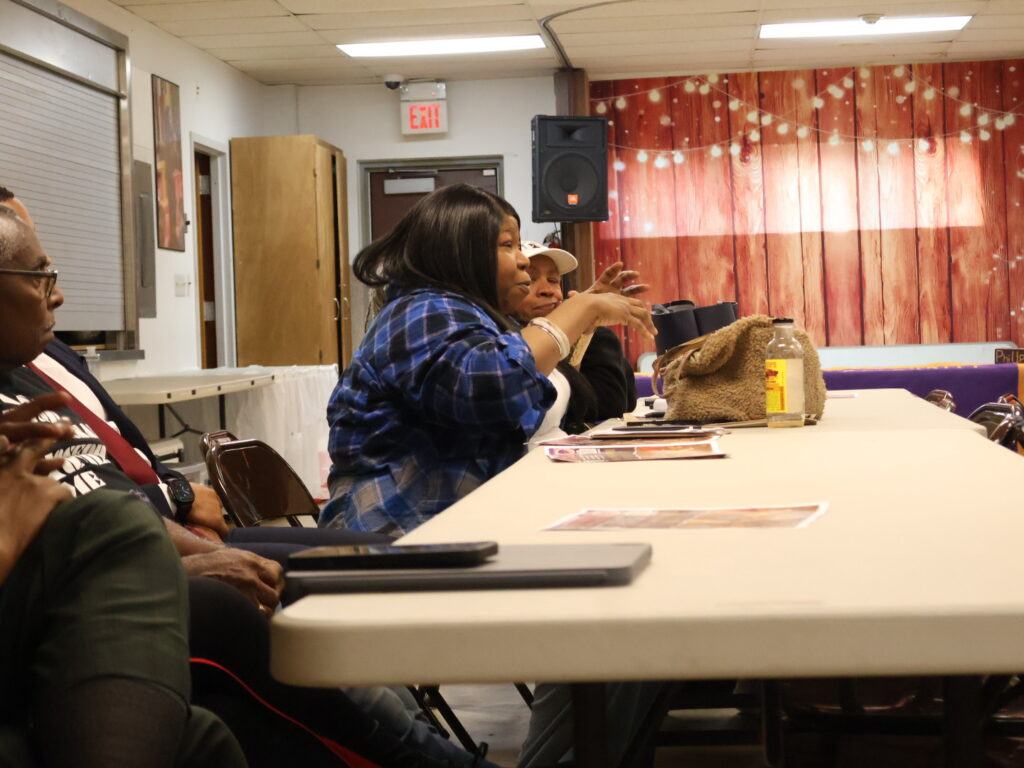
On the evening of May 12, Saint Stephen AME Zion Church in Asbury Park, approximately fifty business owners, faith leaders, contractors, mentors, and neighbors — gathered to talk about who gets New Jersey’s money and why Black communities keep getting locked out of it. The African American Chamber of Commerce of New Jersey(AACCNJ) brought the data. Big Brothers Big Sisters of Coastal and Northern New Jersey(BBBSCNNJ) brought the youth lens. The church brought the people.
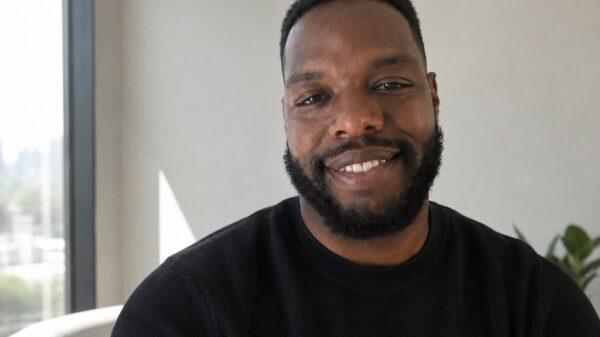
Pastor Quavon Newton affirmed why the building was the right room for the conversation.
“At St. Stephen, it is very vital for us to be open to the community. This event was needed. It was important. The conversation, the inspiration, the information that we received was good for us to continue to use our voice to fight and to repel us back into our communities, to continue to push for change and to get better. St. Stephen is that church that not only knows our history — but we know that history is great, and we need to be making history now. So we’ll always have our doors open for the community.”
What the Data Says
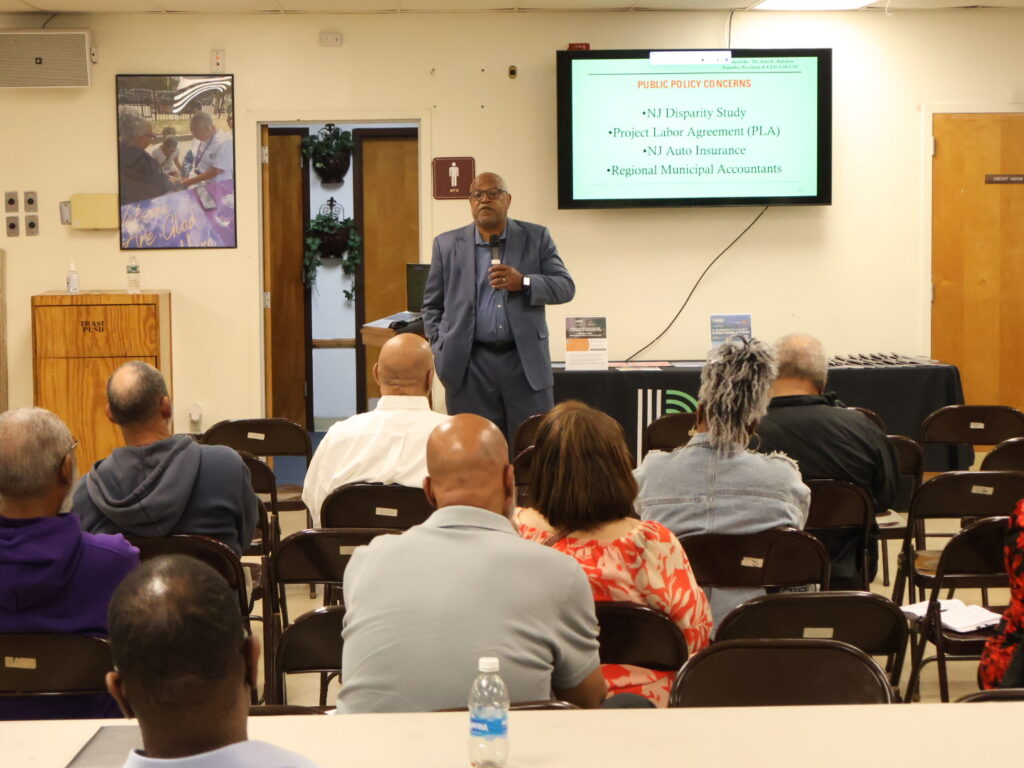
Attorney Robert Johnson, partner at FBT Gibbons Law Firm, walked the room through the 2024 New Jersey Disparity Study — a five-year examination of state contracts awarded between 2015 and 2020.
Black-owned businesses received 0.03% of state contracts across every industry category examined. In Professional Services alone, Black firms received $13.7 million during that period. White-owned firms received $3.4 billion.
The wealth gap runs alongside those numbers. The median household net worth for Black families in New Jersey sits below $20,000. For white households, that figure is $662,500.
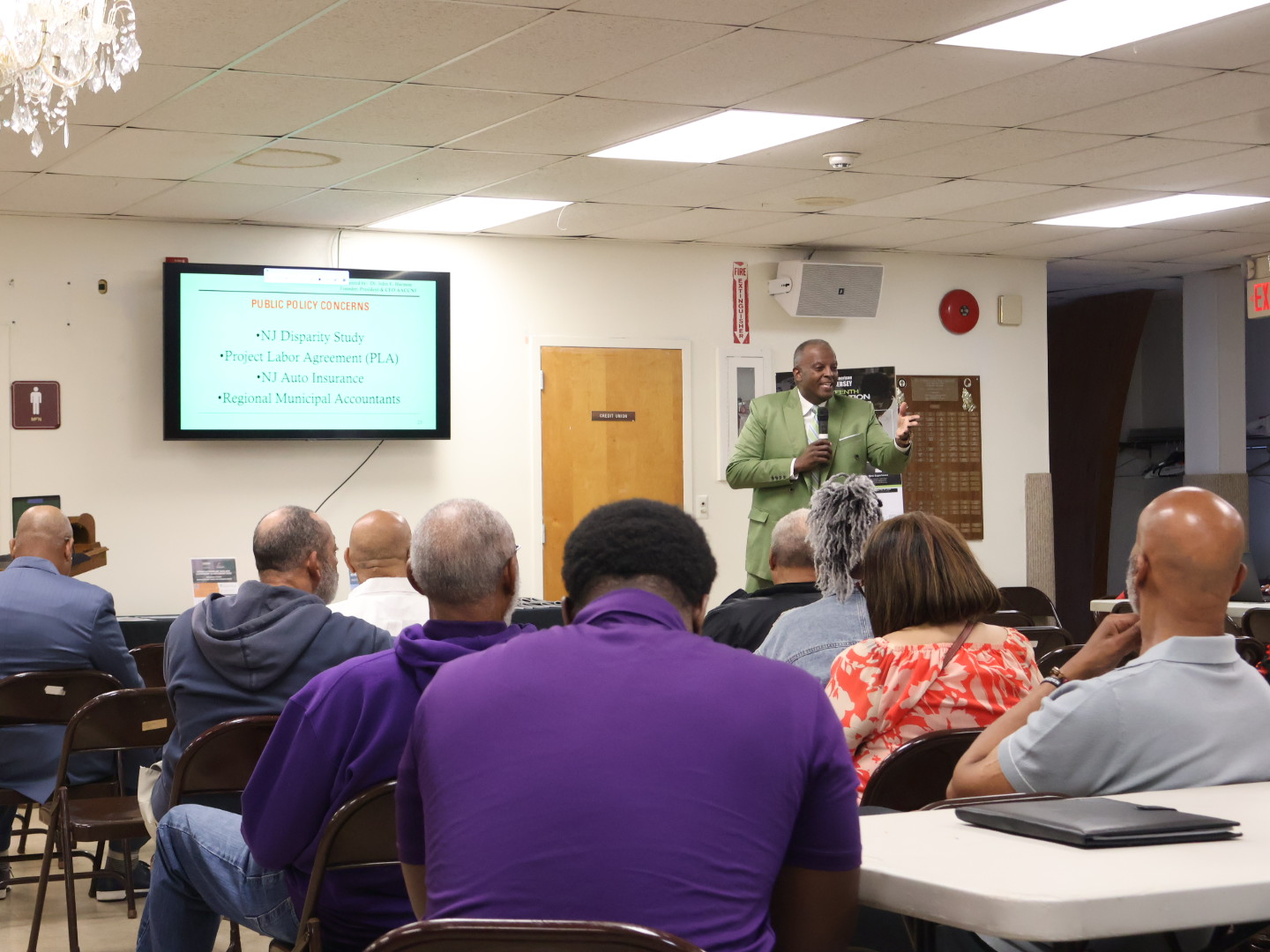
Dr. John E. Harmon Sr., founder, president and CEO of the AACCNJ, has carried these numbers into rooms across the state for years. His directive to the room was consistent with everything he has built the chamber around.
“Take the emotion out of dealing with the disparities,” Harmon said, “and replace it with a comprehensive strategy focused on Black business development and growth.”
That strategy, he argued, has to include elected officials — not as allies to be celebrated, but as partners held to specific commitments. Political support must move in both directions. The community delivers votes. Officials deliver policy.
“We are giving up 90 percent of our vote,” Harmon said. “Based on this data, we get less than 1 percent on our money. That is a bad deal.”
The Policy Levers
The forum identified three pressure points where policy change would produce immediate results.
New Jersey’s project labor agreement threshold sits at $5 million — unchanged since the early 2000s. The federal government moved its threshold to $35 million. New Jersey has not moved. That gap keeps non-union firms, which make up 80% of the state’s construction industry, locked out of public contracts above that floor.
Bonding requirements present a separate wall. The state requires bonding on any public contract over $200,000. The AACCNJ operates a free, eight-week bonding readiness program that has supported between $70 million and $80 million in readiness for businesses statewide. The contractors exist. The chamber can connect them.
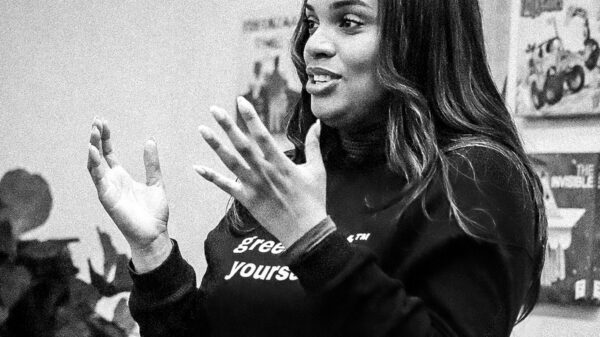
“We have to talk truth to power at all times. And in that space, you have to make sure that you’re not just sitting at the table in the pulpit on Sunday — you have to be out there in the streets on a Tuesday night. We have to be doing the work right now because we’re in the 1800s all over again.”
— Felicia Simmons, Executive Director, WCC Historic Renovation Association
Apprenticeship access is the third barrier. New Jersey requires a 10-year operating history before a program can access state apprenticeship funds. The AACCNJ argues that the timeline should drop to three to five years. Federal certification carries no such requirement. The decade-long clock functions as a gatekeeping mechanism.
Johnson walked attendees through how the chamber helps businesses navigate the contract application process directly. The AACCNJ is not just naming the problem. It is working the solution.
History as Pattern, Not Grief
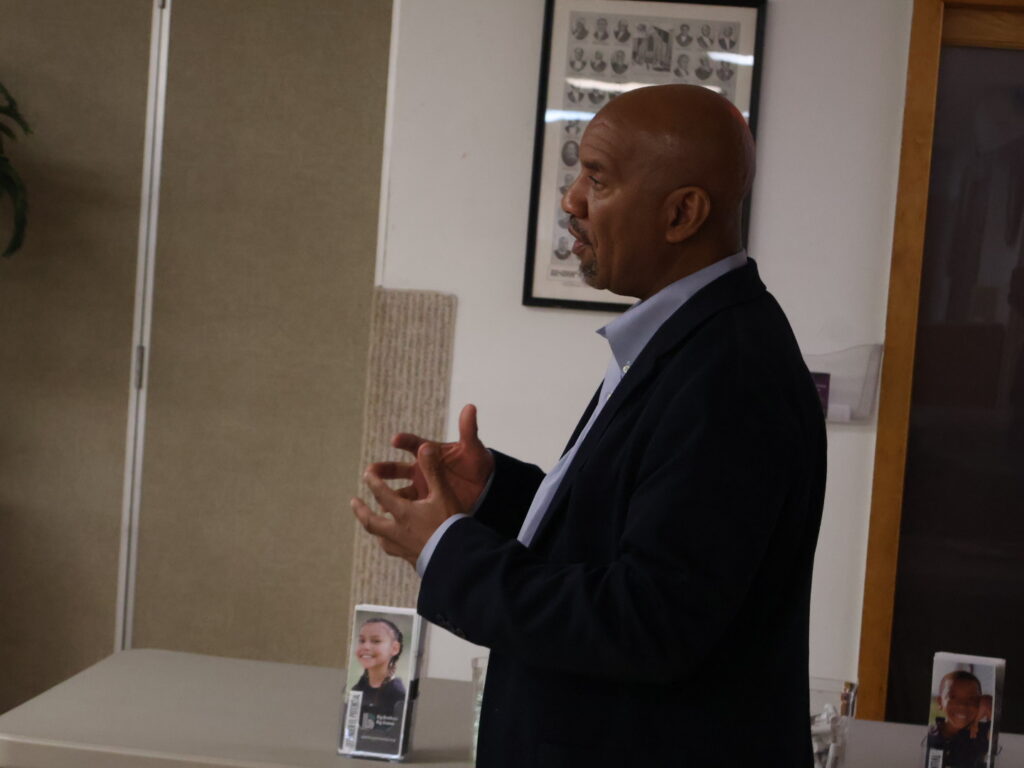
Dr. Keith Wright, former executive director at the NY/NJ Port Authority, grounded the evening in context without letting it become a eulogy.
He traced the current moment through Reconstruction’s collapse, the Homestead Act’s exclusions, the GI Bill’s racial gaps, and redlining — to show a pattern. The goal was recognition. “We have been here before,” Wright said, drawing a line from the Compromise of 1877 to recent Supreme Court decisions that have pulled back voting rights protections.
He pointed to New York as a working model. A community advisory board at JFK Airport negotiated a $400 million project labor agreement. Businesses from surrounding zip codes received contracting priority. An aviation academy launched for local students. At Newark’s Terminal A, that same intentionality generated close to $1 billion in opportunity for Black-owned businesses in under a year.
“It takes intentionality,” Wright said. “And it takes community.”
The Next Move
Matt Stevens, manager of recruitment and engagement for Big Brothers Big Sisters, closed the evening by connecting economic development to mentorship. The two pipelines, he argued, are not separate.
“This is the first of many community collaborations to come,” Stevens said. “Our goal is to secure mentors for youth in our program. Tonight is a great start.”
The chamber left attendees with a short, executable list: push legislators on the PLA threshold and apprenticeship funding criteria, use the chamber’s bonding readiness program, show up to council and redevelopment meetings, and support the campaigns that earn it.
That is where it starts.
For more information on AACCNJ initiatives or to review the full disparity report, visit aaccnj.com.