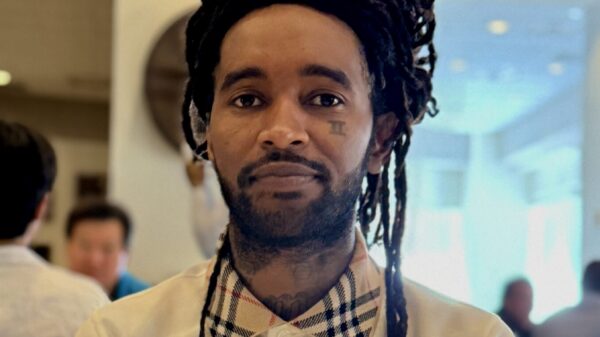
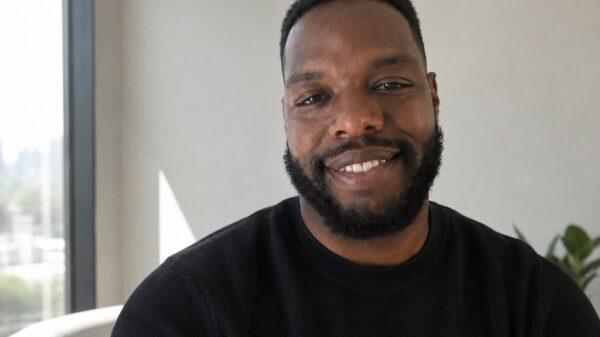


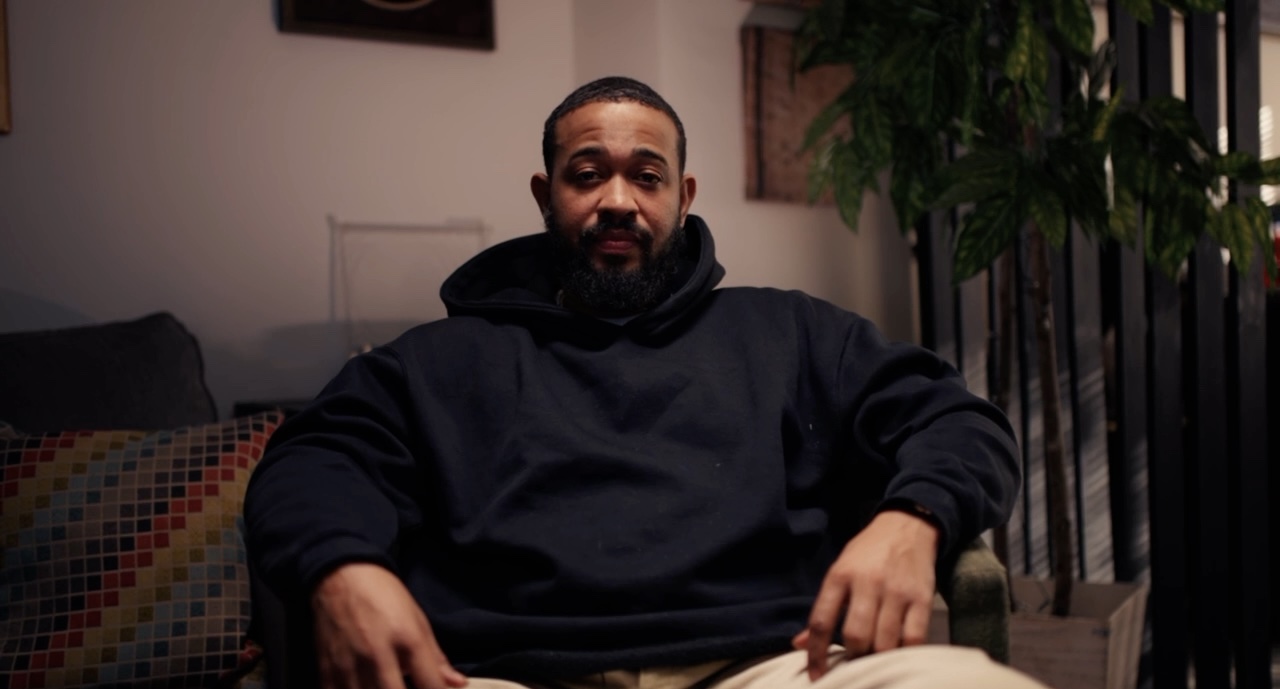
Mark “Fame” Gillette rode 241 miles to D.C. to prove a point about barriers — fatherhood, mental health, and the cycles that trap our communities
“We spelled it p-s-y-c-h-o-l because we’re trying to break the psychology, break the stigmas of everything,” Gillette said.
The spelling is the mission. Brake The Psychol runs on four pillars — youth development, fatherhood, mental wellness, community activation — and it uses a bicycle to carry all of them. Gillette wants that understood up front. The New Jersey foundation’s mission is what happens off the saddle; riding is the method.
“It’s not about the bike,” he said. “Find your thing, find your niche, find what you do that’s natural, that you could get people inspired. The bike is just the vehicle to get to that inspiration.”
He didn’t build it alone. Kerby Louisville, his co-founder, rode beside him from the first mile. Lamont “Tory” Stapleton — a board member who founded the nonprofit Between The Lines — is the one who pulled Fame toward community work in the first place, back when Fame was running the music side of Tory’s org. Three men from Rahway and Linden, one bet: that the cycles trapping the community can be broken like any other habit.
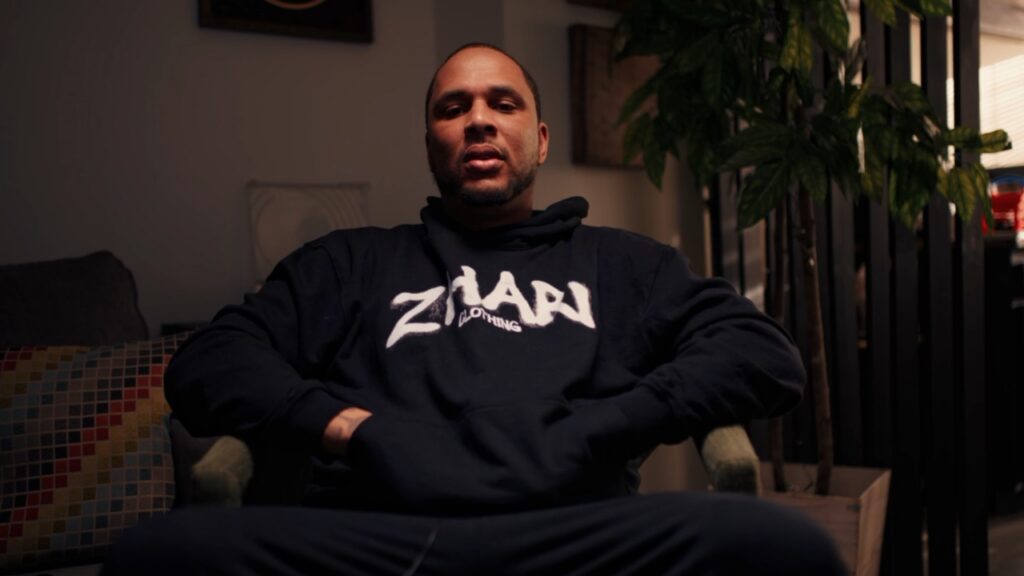
The ride that proved it
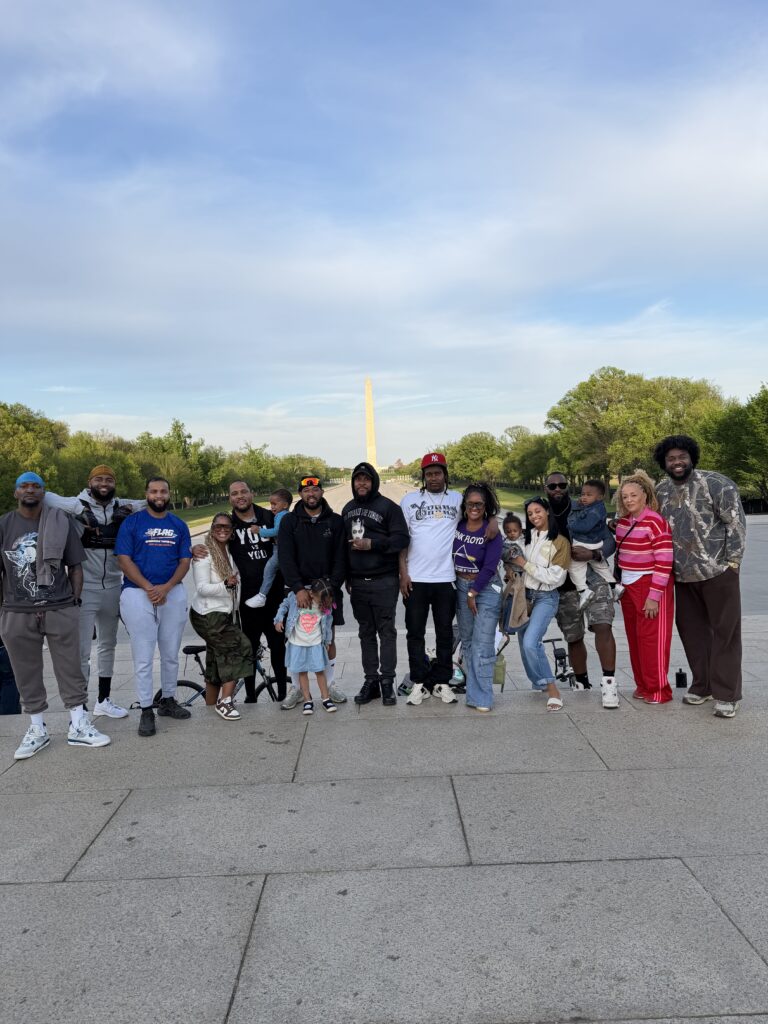
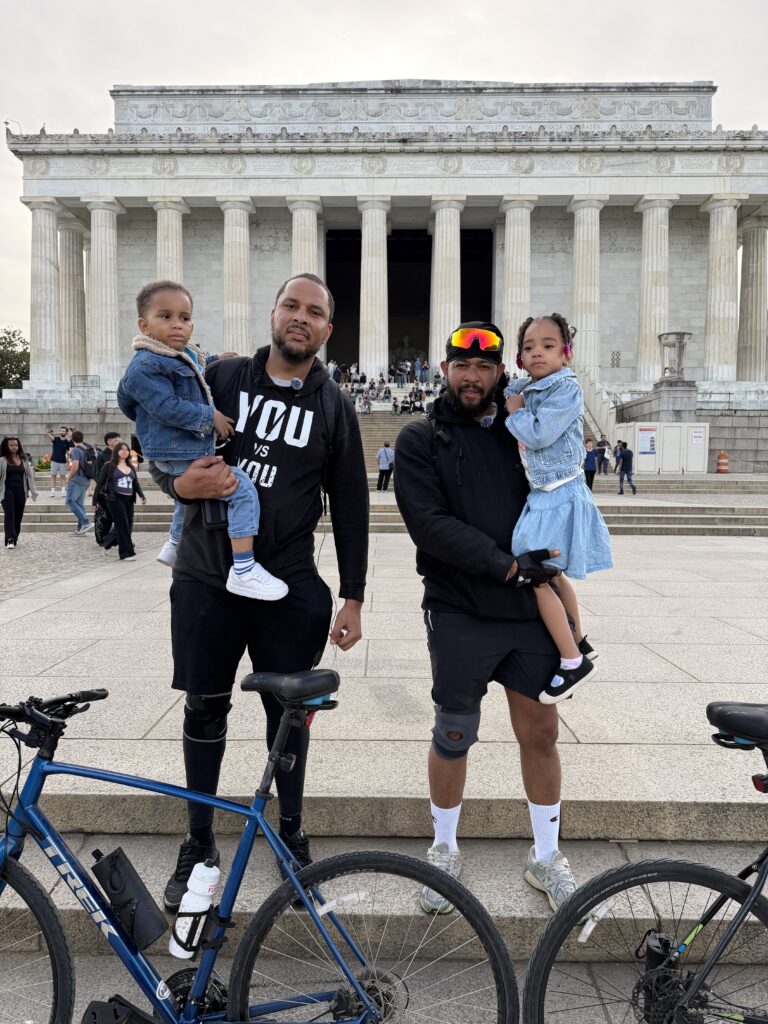
Gillette and his co-founder, Kerby Louisville, rode 241 miles from New Jersey to Washington, D.C. They called it the Proof Ride. They did it on mountain bikes they had no business taking that far, learning the sport in real time, sleeping in Wilmington and Odenton on the way down.
The route ran through West Philly, Chester and Wilmington — blocks that don’t see two Black men on road bikes every day. The reception surprised him.
“Seeing two young Black guys on bikes, it was almost like seeing something they never seen,” he said. “The amount of love that we got. It was dope.”
The distance was a mental test more than a physical one, and that’s the part he brings back to the community work.
“It’s way more mental than physical, I’m gonna be real,” Gillette said. He trained by sitting stationary on a gym bike for two hours at a stretch. “If you could sit on a bike in the gym and not go nowhere for two hours, when you get outside, that’s gonna be a breeze.”
He breaks big goals the way he breaks a route — into miles.
“You gotta take bite-size pieces of it to make it bearable,” he said. “And before you know it, you’ll get to your destination. But first you gotta jump on it.”
Fatherhood as the untapped asset
The center of the work is fatherhood, and it’s personal. Gillette grew up close to his father and distant from his mother. Age gave him a different read on why.
“She had to play the bad guy a lot, which inadvertently made him the good guy,” he said. “He got off easy.”
That reframe drives the foundation’s flagship series, Good Job Dad, and its posture toward Black fathers as the resource the neighborhood keeps overlooking. Gillette argues the barrier is often information, not love.
“They were scared of court. They were scared to go up there, which by default made them deadbeat dads,” he said. “We want to educate men. It’s not as scary as you think.”
He wants grace in the conversation, and patience.
“As a community, we’re healing, and I feel like it’s gonna take two generations for us to heal,” Gillette said. “Our generation is taking fatherhood so serious. The next generation is going to heal the relationship with Black women.”
Good Job Dad points the camera at men who had every reason to walk and stayed. One of his favorite interviews, still unreleased, is a father paralyzed in a motorcycle accident who shows up regardless.
“This series is for dads that didn’t have the easiest route to be a dad,” he said. “And he still shows up.”
Built in the studio
Gillette didn’t arrive at this cold. He came up in music — a producer and Rahway artist, Director of Music at the nonprofit Between The Lines — and he credits that grind for the skills the foundation runs on now.
“Hip hop groomed me for this whole thing,” he said. “Whether it’s public speaking, marketing, being able to produce myself. I don’t need ChatGPT to make myself sound smart. As independent artists, you gotta do everything.”
The pivot started at home. He’d poured himself into his kids and lost track of the rest.
“When I had my children, I really dedicated myself to being a father, like 110 percent,” Gillette said. “But when that shift happened, I kind of forgot about myself.”
When the kids got older, he went looking for what came next. He knew two things: it wouldn’t be music, and it wouldn’t be about him.
“I knew my next step was gonna be community driven,” he said. “Something based on other people, not myself so much.”
The blueprint before the budget
The scoreboard reads like a movement. More than 1,000 miles ridden. Over $7,000 raised. Fifteen-plus community partners. A 501(c)(3), a scholarship fund, and a deck that sells a $10,000 founding tier and sketches a community center.
Held next to the blueprint, $7,000 is a starting balance. The scholarship goal — at least 10 students a year — still sits in the future tense. Gillette knows the gap. He’s betting the infrastructure comes before the check.
“If somebody came to bring you a million dollars, would you be prepared to even take it?” he said. “You don’t even got the infrastructure to take the money.”
So he built the paperwork first. Board, tax status, pillars, receipts. Ask him where this goes in 10 years and he doesn’t describe a bike. He describes a building.
“The nonprofit belongs to the community. It doesn’t belong to any person,” he said. He wants a community center — “like the YMCA, like the Boys and Girls Club” — with the four pillars under one roof and kids moving through it toward college.
“If we could have one person go through the system successfully, that’s big,” he said. “But I see 10, 20, 30, 100 kids going through the system, and it really affecting a life.”
The bikes got him on the road. The impact happens when he gets off.
On Aug. 23, Gillette and Louisville will roll out of Jacksonville for the Vice City Ride — 400 miles to Miami in three days. Every mile is up for sponsorship at $50, and the money seeds the scholarship fund. You can dedicate one to somebody who broke their own cycle.
[PULL QUOTE] “It’s not about the bike. Find your thing. The bike is just the vehicle.” — Mark “Fame” Gillette
Buy a mile. Move somebody forward: https://www.zeffy.com/en-US/donation-form/buy-a-mile-every-mile-moves-someone-forward?utm_source=ig&utm_medium=social&utm_content=link_in_bio