







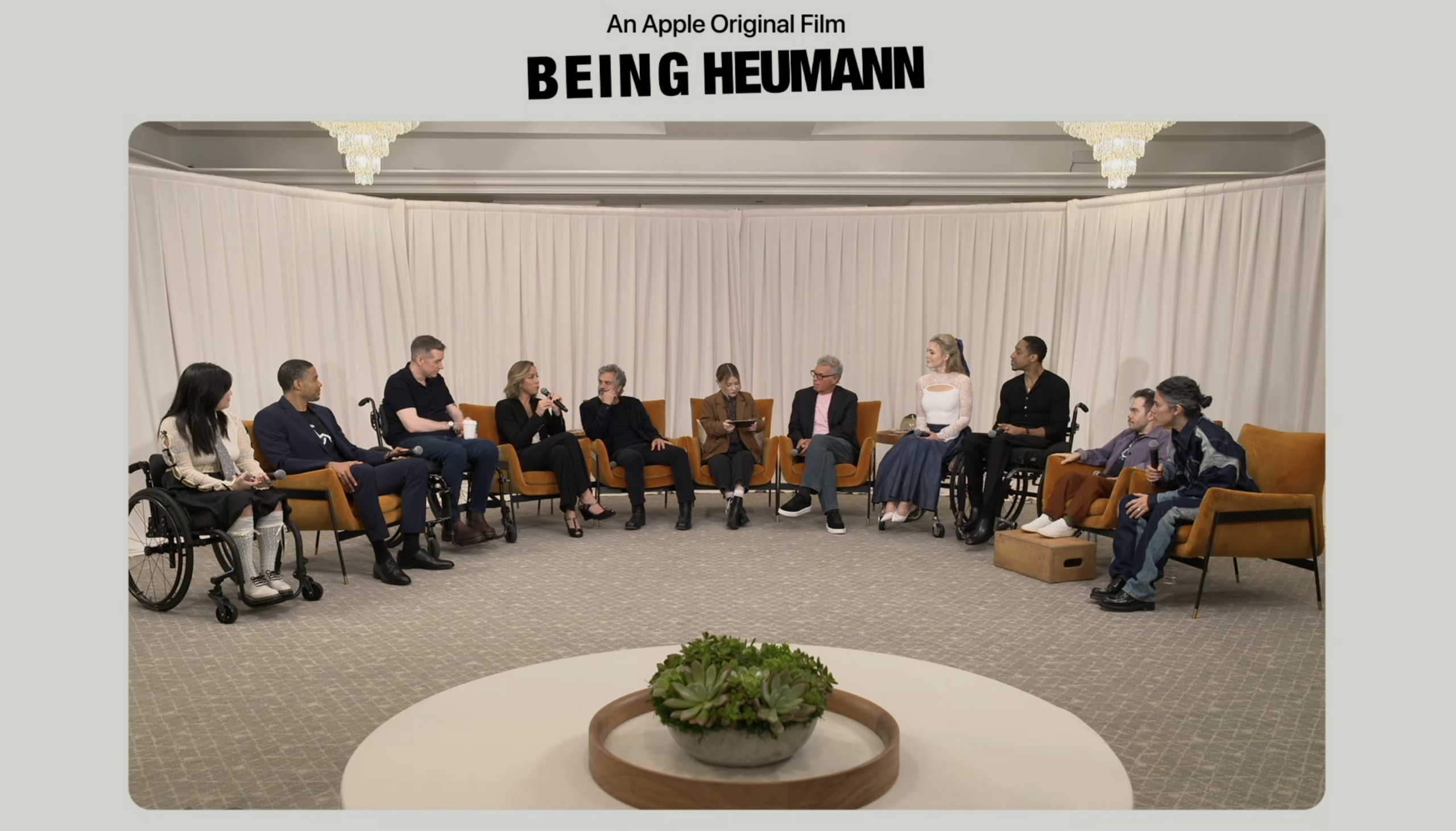
At Apple’s global press conference, the cast spoke on the Black Panthers, the 504 sit-in, and the names the record left behind.
When Apple gathered the cast of “Being Heumann” for a global press conference this week, two of the questions on the table came from West Ward Beans. We sent them after covering the New York screening. Both got read to the panel, and the answers spoke directly to the Black men and women who helped hold the 1977 Section 504 sit-in, and to the erasure that kept their names quiet for decades.
Our first question went to Antwan Tolliver, who plays Brad Lomax, the Black Panther who brought the Party into the occupation. We asked what he learned about Lomax that the record left out.
Tolliver said the research started with a phone call. Heder handed him the number for Lomax’s brother, Glenn. “Ray and I went back and did our homework. We FaceTimed him for hours,” he said. “He humanized the experience for me. He gave me so much insight on his brother, showed me photos of his childhood, where he came from, when he was at Howard University.”
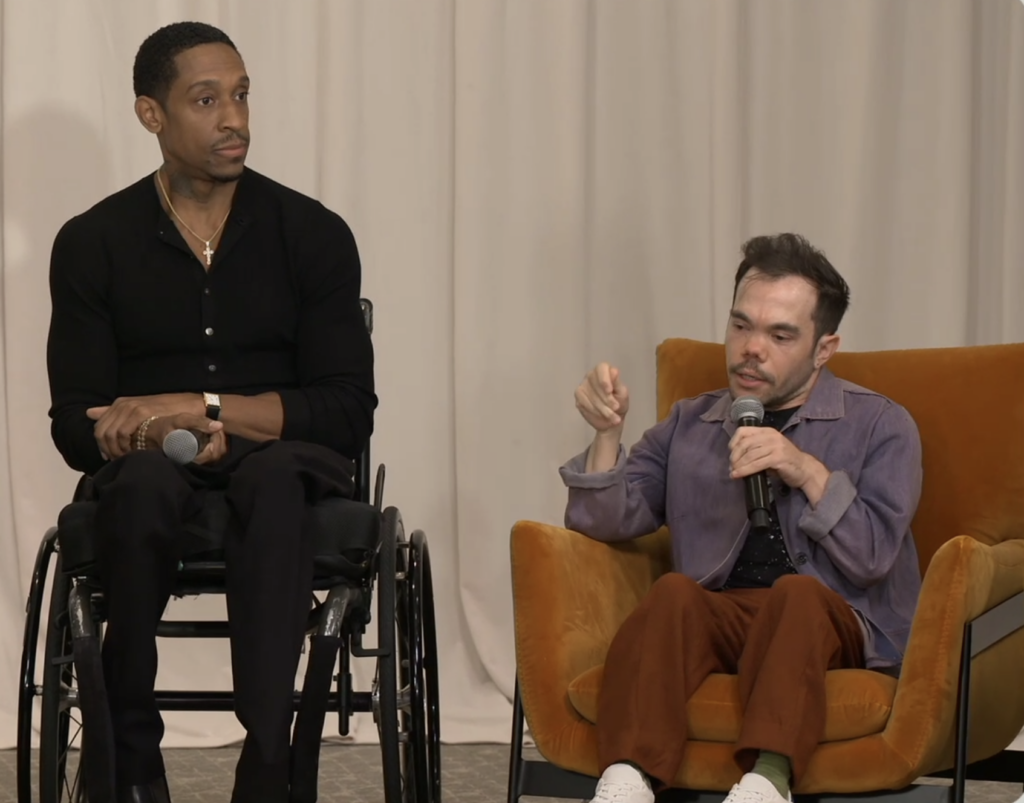
The harder part was the silence around Lomax. “I didn’t see any videos of him,” Tolliver said. “I didn’t see anything of him speaking.” For an actor building a hero, that absence became the assignment. He had to make sure the representation was right, because the film would stand in for a man the footage forgot.
Heder named the reason the footage was thin. “It was so hard to find information on Brad. There’s been this erasure of him,” she said. “It really spoke to me about, even within the disability community, the erasing of Black disability rights.” The team dug for clues because the alternative was letting a leader disappear twice. “If we’re going to represent this guy who was a hero that the world doesn’t know about, how do we honor him when there’s no information available?”
Ray Fisher, who plays organizer Chuck Jackson, put the job plainly. The work was “filling in those blanks in a way that is going to do justice to Brad Lomax and his legacy.”
Our second question went to Fisher. The Panthers ran a hot meal into that building every day the occupation lasted, a Black radical organization sustaining a disability rights fight. We asked what it meant to put that alliance in front of a national audience now.
“It means everything, really,” Fisher said. “It’s about letting people know that you can make a difference, even if it’s, in some people’s opinions, just a meal.” He pushed on the point. “That meal is sometimes just enough to get you to that next place to continue the fight. It’s well documented that if the Panthers had not intervened, the sit-in would have collapsed very early on.”
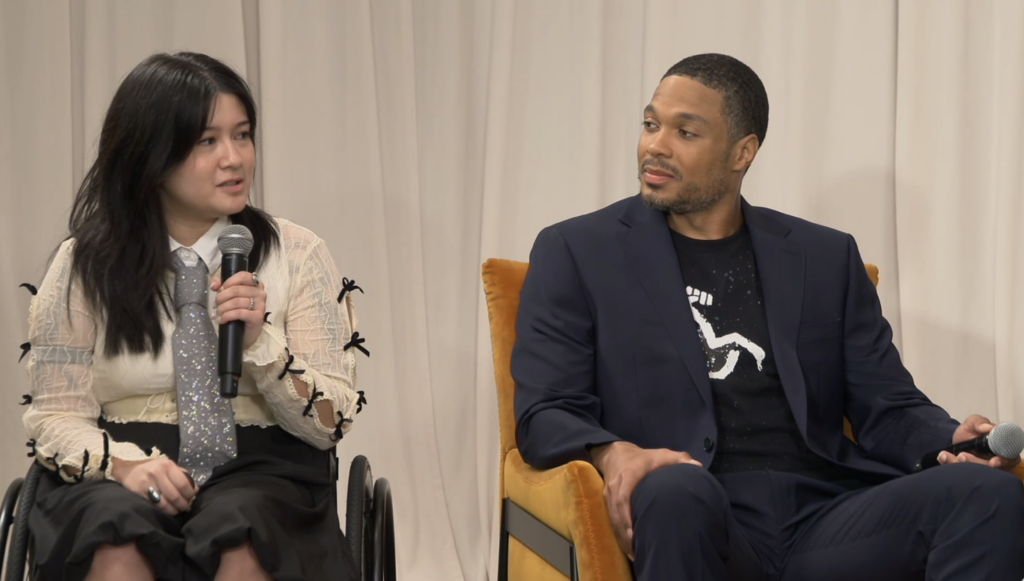
Then he named the stakes behind the casting. “They’re power to the people, but it’s not just power to Black people, it’s all power to all people. That’s the thing that made the Black Panthers really scary to the man.”
Fisher traced that fire back to the first days of production. During the two weeks the cast spent getting to know one another, Heder asked him what mattered to him about the project. “First thing out of my mouth was, I want to stick it to the man,” Fisher said. “And Sean, without missing a beat, goes, ‘Fuck yeah.'” He closed on a hope that reads like a mission statement. “Hopefully we have done the Black Panthers proud in terms of our interpretation.”
Mark Ruffalo plays Joseph Califano, the official who stalled the law. He built the man as the obstacle without turning him into a villain. “You could flatten that guy out and have him be a complete asshole,” Ruffalo said. “But then it’s just not as interesting a story to tell. Somewhere inside of everybody, you want to believe there’s something decent in them.” The film, he added, sat close to home. A longtime friend uses a wheelchair, and Ruffalo has carried him up subway stairs when the system failed. “I know his struggle. It’s very personal to me.”
Heder keeps returning to why a 50-year-old story lands now. “This was a time when collective action worked,” she said. “The Black Panthers showed up and fed them, the gay community in San Francisco showed up, the United Farm Workers showed up. It came to this intersectional moment.” Her takeaway was shorter. “We all need a little Judy energy in our lives.”
“Being Heumann” opens in select theaters Nov. 6 and streams on Apple TV Nov. 13. See it, then go find out who fed the movement.